

Agentic AI is no longer theoretical. Enterprises are actively experimenting with autonomous agents across sales, support, IT, finance, and operations. The promise is clear: faster execution, lower operational cost, and new levels of productivity.
Yet despite growing investment, most organizations struggle to move beyond pilots. Research from McKinsey, MIT, Deloitte, and Harvard Business Review points to the same conclusion. The barrier is not intelligence. It is architecture.
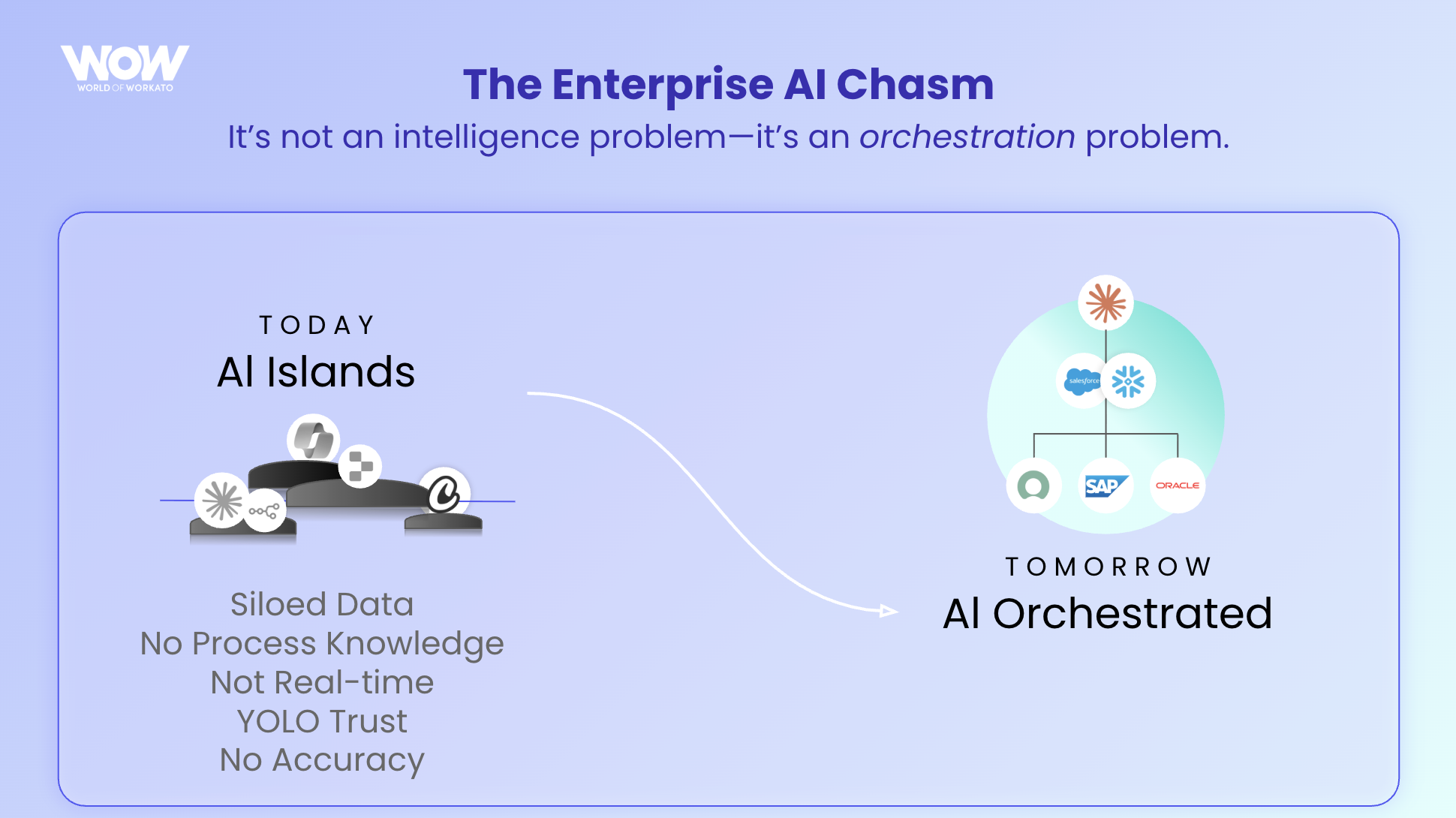
Through this three-part series, we explored what it actually takes to deploy agentic AI in production. The answer comes down to three non-negotiables: orchestrated context, enterprise trust, and execution accuracy. Together, these form the foundation of the agentic enterprise.
1. Moving Beyond AI Islands with Orchestrated Context
Most AI agents today operate in isolation. They see one application, one dataset, or one workflow at a time. As a result, they respond with partial information and incomplete decisions.
In the first post, The Context Orchestration Gap, we examined why agents fail without orchestrated context. Enterprise work does not happen in a single system. It spans CRM, ERP, data platforms, approval chains, and real-time business signals. Agents need visibility across all of it.
Orchestrated context connects data, processes, and events into a unified view so agents can understand what is happening and what needs to happen next. Without it, agents guess. With it, they can reason and act across end-to-end workflows.
This is the difference between answering questions and completing work.
Read: The Context Orchestration Gap: How to Get Meaningful ROI from Enterprise AI
2. Closing the Trust Gap in Agentic AI
Even when agents have the right context, most enterprises still hesitate to give them autonomy. The reason is trust.
In the second post, The Trust Gap in Agentic AI, we explored why governance, security, and identity are the gating factors for production deployment. Harvard Business Review research shows that while a large majority of leaders believe agentic AI will be transformative, only a small fraction trust agents to run core processes autonomously.
The issue is structural. Agents act as digital insiders. They can access systems, trigger transactions, and affect customers, employees, and financial records. Without permission-aware access, identity inheritance, auditability, and policy enforcement, autonomy becomes risk.
Trust is not something enterprises add later. It must be built into how agents access systems and execute actions from the start.
Read: The Trust Gap: Establishing a Security & Governance Infrastructure for Enterprise AI
3. Why Accuracy Is an Execution Problem
Context and trust set the stage, but accuracy determines whether agents can actually run the business.
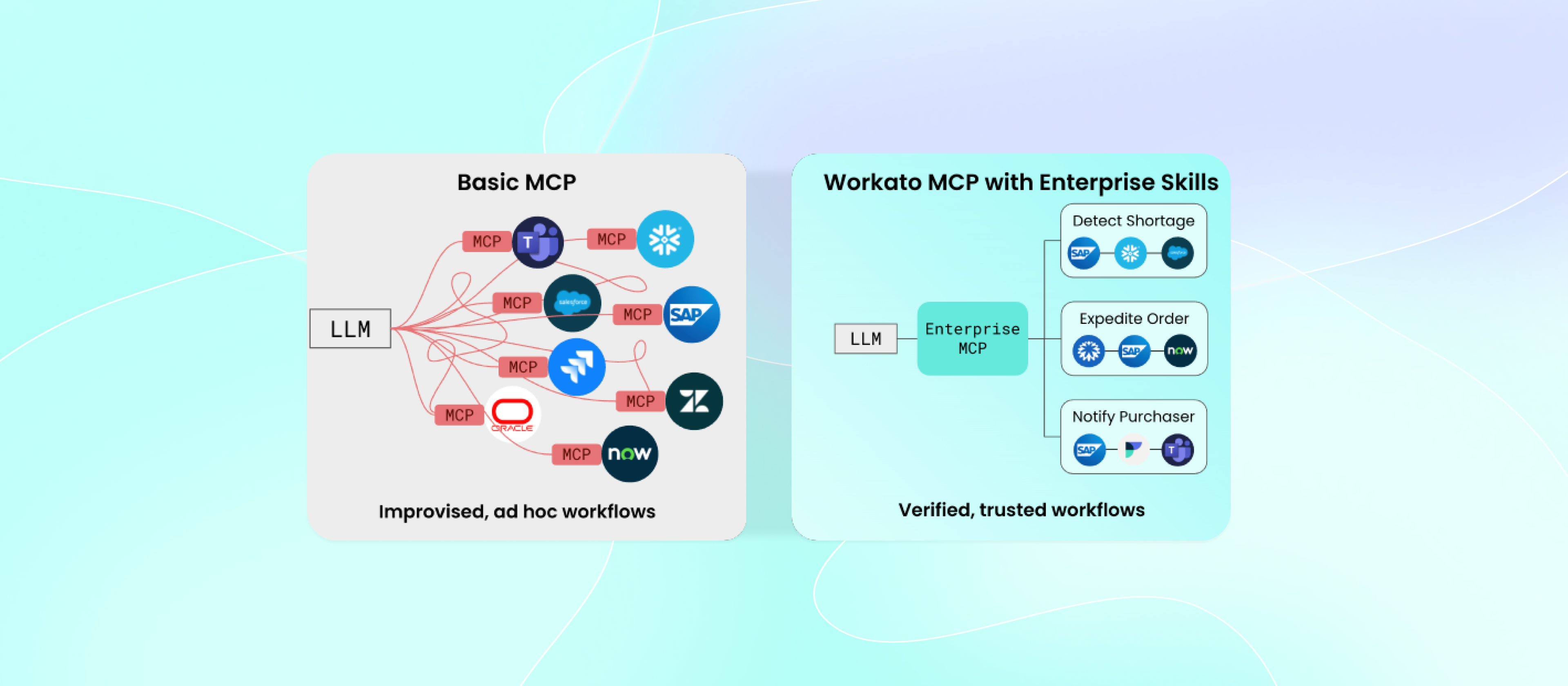
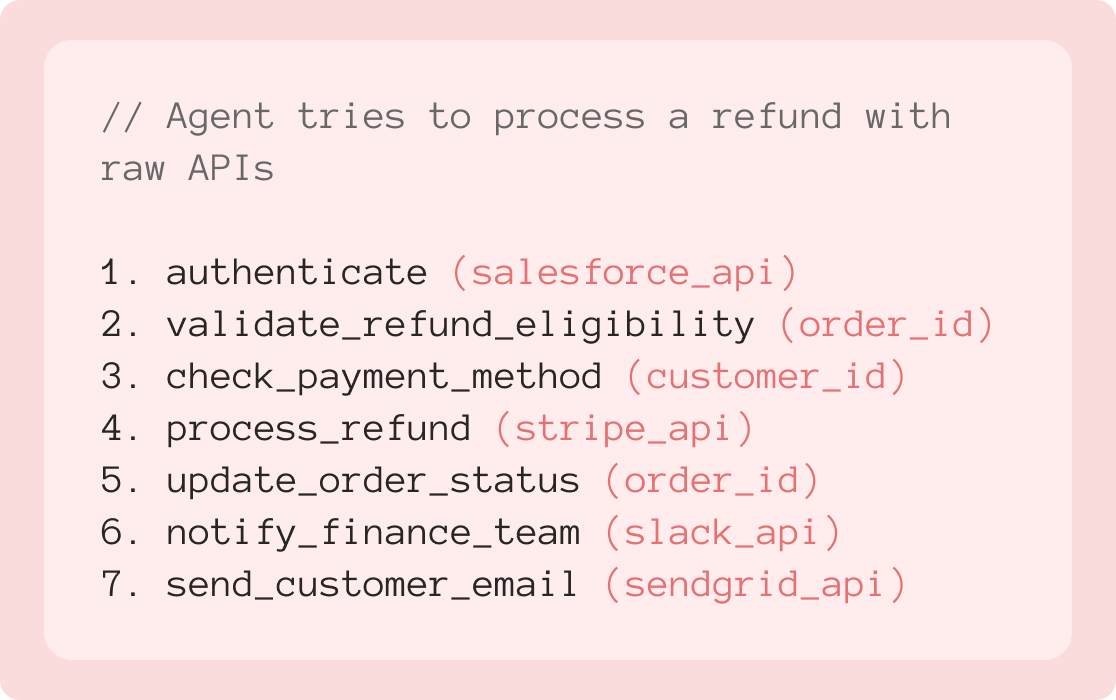
In the third post, Accuracy Is an Execution Problem, we looked at why even well-designed agents fail in production. The root cause is execution variability. When agents rely on raw APIs and tools, every run becomes a new interpretation of how work should be done. Outcomes vary. Errors compound. Confidence erodes.
Accuracy improves when agents stop stitching together steps and start invoking enterprise skills. Skills encapsulate complete business actions with built-in logic, validations, retries, and compliance. They separate reasoning from execution and ensure the same outcome every time.
This is how enterprises move from probabilistic behavior to deterministic operations.
Read: Accuracy Is an Execution Problem: Why Enterprise Skills Matter for Agentic AI & MCP Servers
The Architecture Behind the Agentic Enterprise
These three foundations are not independent. They reinforce one another.
- Orchestrated context ensures agents see the full picture.
- Enterprise trust ensures agents act within defined boundaries.
- Enterprise skills ensure agents execute correctly, every time.
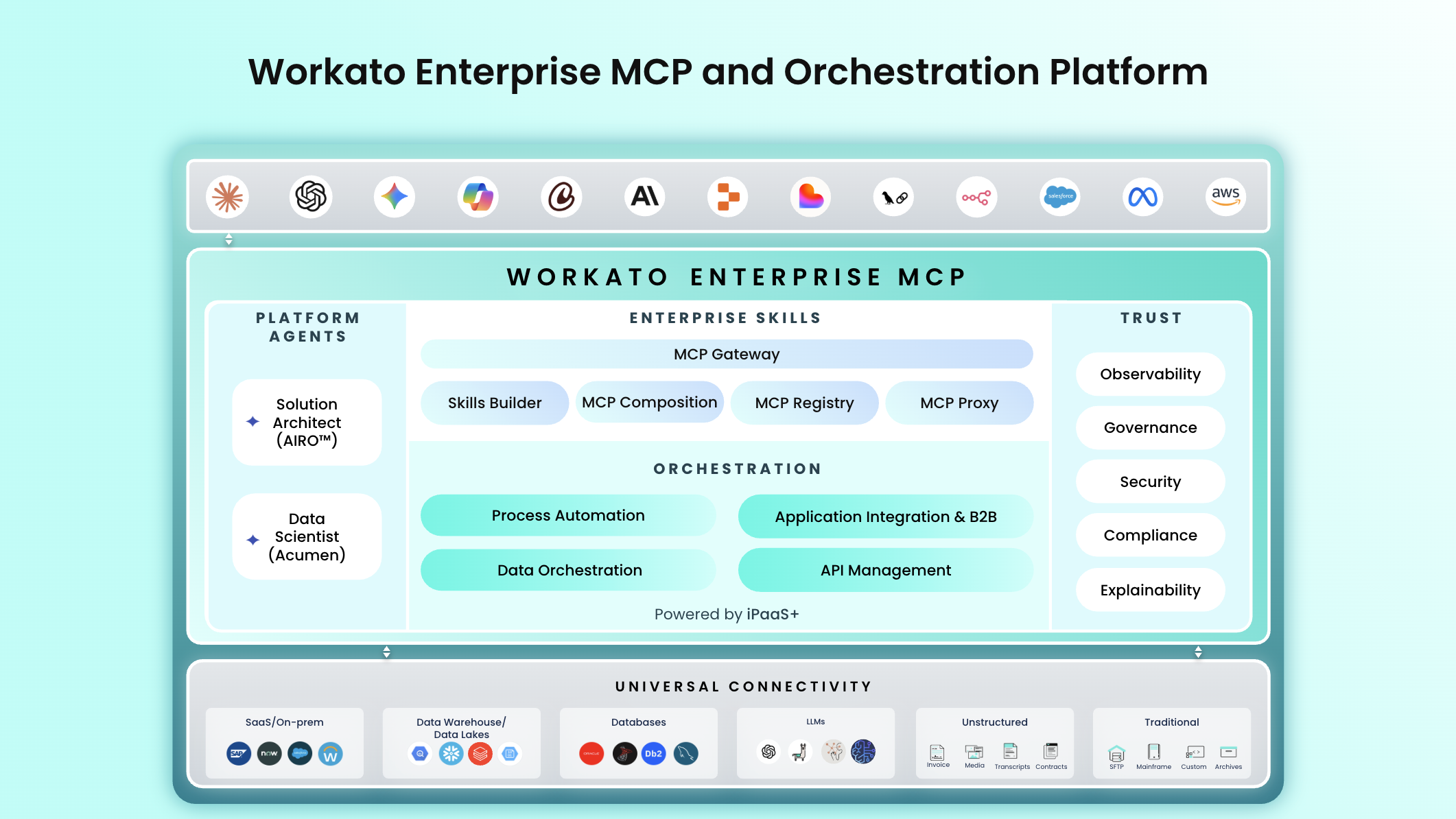
Together, they transform agentic AI from experimentation into an operational capability. Accuracy stops being something teams hope for, trust stops being a blocker and context stops being fragmented. This is what it means to be agent-ready.
Where Enterprises Go Next
Enterprises that succeed with agentic AI will not be the ones with the most advanced models. They will be the ones that build the right foundation. Architecture determines outcomes.
As agentic AI continues to evolve, the organizations that invest in context, trust, and execution will be the ones that move fastest, scale safely, and deliver real business impact.

Explore how Workato Enterprise MCP brings context, trust, and accuracy together for production-ready agents