The biggest killer of enterprise AI momentum is the gap between “yes, let’s do AI” and anything actually happening. Steering committees, use case prioritization, scoping, IT queues. Six months pass and nothing moves.
Skip that. Here are five use cases that work out of the box with pre-built MCP servers. No custom builds, no engineering queue, no roadmap required. Deploy this week, show results next.
1. Sales: Full Deal Context in Two Minutes
Before: Reps spend 30 minutes before every major call pulling data from Salesforce, scanning Gong transcripts, checking competitor notes, and updating their forecast. Half of it is guesswork. The other half doesn’t happen at all.

After: A rep asks Claude to pull the full picture on a deal. Claude connects to Salesforce, Gong, and the competitive intel database in real time, scoped to that rep’s permissions. Deal summary, call highlights, competitive risks, and a recommended next step. Ready in two minutes.
The Salesforce and Gong MCP servers are pre-built. IT deploys them, sets the permission boundaries, and sales starts using them the same week.
2. Finance: Cut Days Off Month-End Close
Before: Month-end close means pulling data from the ERP, reconciling across sub-ledgers, chasing discrepancies through email threads, and manually updating spreadsheets. Finance teams spend days on work that is repetitive, error-prone, and time-sensitive.

After: Claude connects to the ERP, general ledger, and bank reconciliation tools. It flags discrepancies, pulls supporting documentation, and prepares reconciliation summaries for review. The controller spends time on judgment calls, not data gathering.
ERP and financial system MCP servers are pre-built for major platforms. Access controls ensure Claude only sees what the finance team is authorized to access.
3. Support: Faster Resolutions, Less Digging
Before: A support agent gets a ticket in Zendesk. They check the knowledge base in Confluence, look up the customer’s product configuration, and read through the last three tickets to understand history. Ten minutes of digging before they even start writing a response.

After: Claude pulls the ticket, the relevant knowledge base articles, the customer’s product data, and prior ticket history. It drafts a response grounded in actual documentation. The agent reviews, adjusts, and sends.
Zendesk and Confluence MCP servers are pre-built. The agent still owns the response. Claude handles the research.
4. HR and Ops: Onboarding Without the Checklist
Before: Onboarding a new employee touches HR, IT, facilities, and the hiring manager. Accounts need provisioning, equipment needs ordering, training needs scheduling, and most of it is coordinated through email chains and manual checklists.
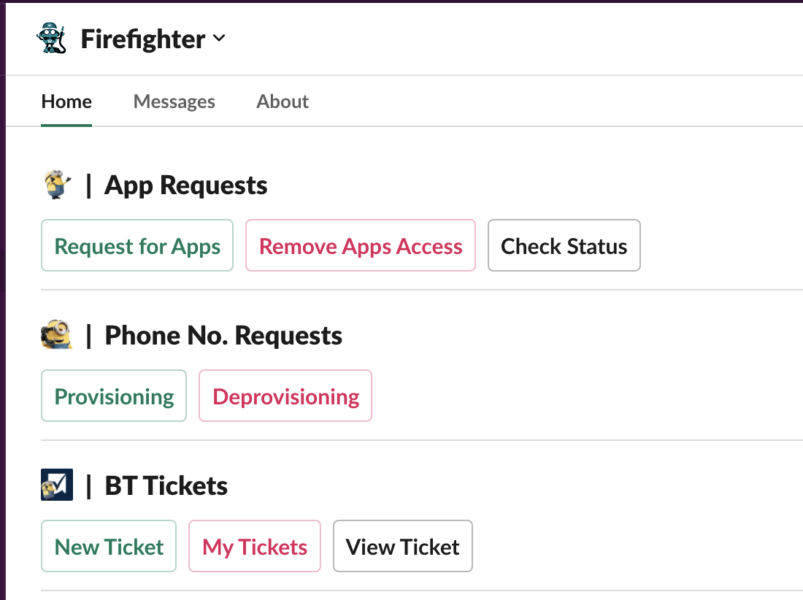
After: When a new hire record is created in Workday, Claude orchestrates the full sequence. It provisions accounts based on role, triggers equipment requests, schedules training, and sends welcome communications. The hiring manager gets a status update instead of a to-do list.
HRIS and identity management MCP servers are pre-built. The onboarding sequence follows existing company policy, now enforced automatically instead of manually.
5. Marketing: Campaign Performance at Your Fingertips
Before: A marketing leader wants to know how last quarter’s campaigns performed. That means pulling data from HubSpot, cross-referencing ad spend in Google Ads, checking pipeline attribution in the CRM, and building a summary deck. By the time the brief is done, the next quarter is already running.
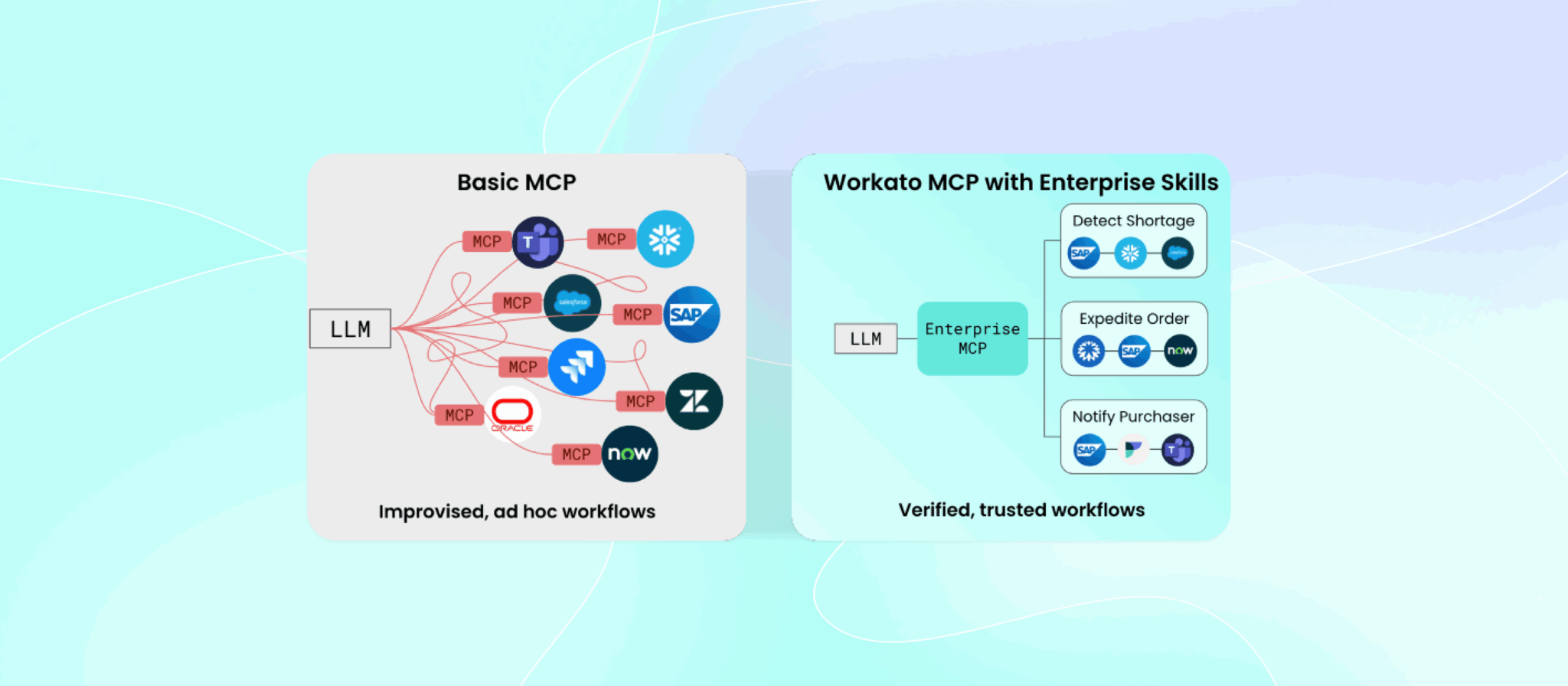
After: Claude pulls campaign performance, ad spend, and pipeline attribution across HubSpot, Google Ads, and Snowflake. It delivers a performance brief with what worked, what didn’t, and where to shift budget. The CMO gets clarity in minutes, not weeks.
HubSpot, Google Ads, and data warehouse MCP servers are pre-built. No analyst queue. No dashboard request.
The Bigger Play
These five are the starting point. They are fast, visible wins that prove AI can do real work when it is connected to real systems.
Once employees see what is possible, adoption compounds. The sales manager asks about automating forecast updates. The finance analyst who saved two days on close starts looking at what else is just manual data gathering.
That shift from five use cases to fifty is where most enterprises stall out. The first wins come easy. Scaling them across departments, with governed access, identity controls, and audit trails, is where it falls apart.
This is why Workato built Enterprise MCP. Dozens of pre-built MCP servers, running on the same platform that already connects 12,000+ apps for half the Fortune 500. The integrations your teams rely on today become the AI capabilities they use tomorrow. No rework. No second platform. No shadow IT risk.
IT makes one platform decision. Every team gets governed access to the systems they already use. Rate limiting, role-based permissions, and full audit trails come built in, not bolted on. SOC 2, ISO, PCI, HIPAA compliance carries over from the infrastructure you already trust.
The five use cases get you the quick wins. Workato Enterprise MCP gives you the platform to scale everything that comes next.