There’s a term making its way through every serious AI conversation right now. You’ve probably started hearing it in board briefings, vendor pitches, and analyst reports. It’s called MCP, short for Model Context Protocol, and if you’re a CIO in Asia trying to figure out which AI investments will actually matter, this is one you can’t afford to skim past.
MCP is more than just passing hype. It’s the infrastructure shift that determines whether your AI agents stay in the pilot forever, or finally make it to production.
Let’s break it down.
What Is MCP, Really?
AI agents are only as useful as the context and tools they can access. The problem is that every enterprise runs on a patchwork of systems: your ERP lives here, your CRM is over there, your HRIS is in a different corner entirely. Getting an AI agent to work meaningfully across all of them typically requires custom code, brittle integrations, and a lot of engineering patience.
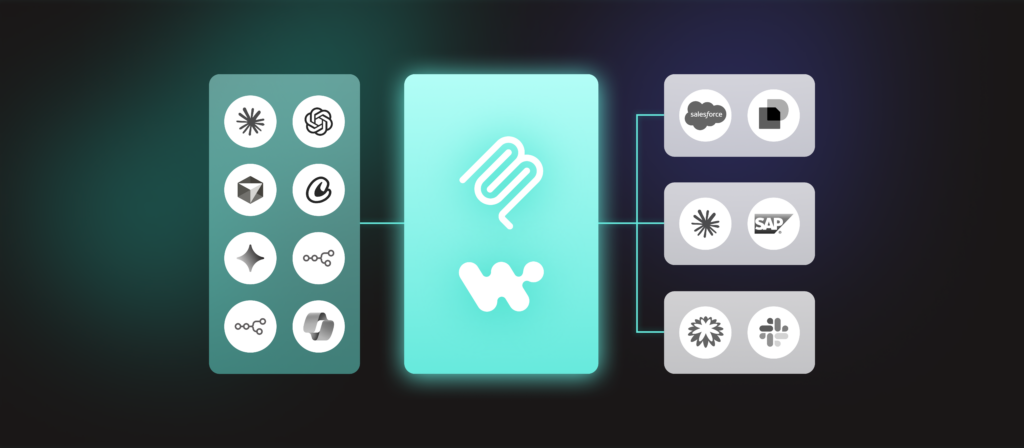
MCP changes that equation. At its core, Model Context Protocol is an open standard (think of it as a universal plug) that defines how AI agents discover and use tools and data sources. Instead of building one-off connections between every AI model and every enterprise system, MCP creates a common language. Standard input, standard output, no matter where you are in the stack. Salesforce, ServiceNow, Google, and others have already moved to expose their systems via MCP. The direction is clear.
Why This Matters in Asia
Most large enterprises across Singapore, Indonesia, the Philippines, Hong Kong, Korea, and Japan are running deeply complex, multi-layered tech stacks. Many have gone through years of digital transformation, layering cloud platforms on top of legacy on-premise systems, often with regional customisations that don’t exist in deployments in other parts of the world. The integration debt is real, and it’s significant.
At the same time, the pressure to deploy AI is intense. Governments across the region are actively incentivising adoption: Singapore’s Smart Nation agenda, Indonesia’s digital economy ambitions, the Philippines’ push toward BPO modernisation. The macro signals are pointing in one direction. Move fast, and make AI work.
But here’s the tension: most enterprises are finding that their AI pilots don’t survive contact with production. The agents look impressive in demos, then fall apart when they need to touch real data across real systems. The root cause, almost every time, is the same. The agent didn’t have the context it needed, or it couldn’t act reliably across the enterprise.
That’s the problem MCP is built to solve.
The Gap That Kills Most AI Pilots
There are three reasons agents fail to scale in enterprises, and they’re worth naming plainly.
Limited context: Agents that can only see one app or one database at a time can’t make smart decisions. A procurement agent that can’t see inventory levels isn’t useful. A finance agent that can’t cross-reference HR data is flying blind. Isolated data access produces isolated answers.
Poor security and transparency: Agents operating without proper access controls and audit trails create real compliance risk. For CIOs in regulated industries, including financial services, healthcare and public sector, this isn’t theoretical. It’s a deployment blocker.
Inconsistent output: Agents that give different answers to the same question every time can’t be trusted with mission-critical processes. Without business logic and error handling baked in, they simply aren’t reliable enough for anything that matters.
MCP as a protocol addresses part of this. It creates the standard interface. But the protocol alone doesn’t solve the enterprise problem. That’s where the distinction between basic MCP and enterprise-grade MCP becomes critical.
Basic MCP vs. Enterprise MCP: The Distinction CIOs Need to Understand
Most early MCP implementations are what you’d call DIY MCP: developers wrap an existing API in the MCP format, and an agent can now call it. Fast to build. Great for a proof of concept. But it stops working the moment real enterprise requirements come into play.
There’s also a subtler distinction worth understanding. Many AI platforms and LLM tools — including Claude, Copilot, and others — ship with native MCP support baked in. This can give the impression that MCP is already handled. Native LLM MCP support tells you the model knows how to speak the protocol. It says nothing about what’s on the other end: whether your enterprise systems are connected, whether actions are governed, whether workflows are resilient, or whether any of it meets your compliance requirements. The protocol is the handshake. Enterprise MCP makes the handshake mean something.
Here’s how the three tiers compare:

A DIY or LLM-native MCP server exposes individual API endpoints. Workato Enterprise MCP exposes governed business skills such as “process a new customer onboarding,” “submit a procurement request,” or “generate and send a quote for approval.” The agent isn’t managing raw API calls. It’s executing pre-validated, multi-step business workflows with error handling, audit trails, and access controls already built in.
For CIOs, that distinction is everything. Agents working at the level of raw APIs create security risk, operational fragility, and governance headaches. Agents working at the level of enterprise skills deliver outcomes you can actually audit, trust, and scale. Workato Enterprise MCP connects across 10,000+ enterprise systems with 1,200+ pre-built connectors and 900,000 workflow templates, with role-based access control, full audit trails, and compliance automation built in. This allows agents to operate within the same governance boundaries as every other business process.
The Transition Is Already Underway
MCP is quickly becoming the connective tissue of enterprise AI. The organisations that understand it now will be the ones who deploy AI that actually works at scale, not just in demos.
For CIOs across Asia, the moment to get serious about this is now. Not because MCP is a trend worth chasing, but because the AI investments you’re being asked to make today will succeed or fail based on whether the underlying infrastructure can support them. MCP is that infrastructure, and the gap between basic and enterprise-grade matters more than most vendors will tell you.
Ready to See What Enterprise MCP Looks Like in Practice?
Schedule a demo with Workato to see how Enterprise MCP delivers the context, security, and reliability your AI agents need to move from pilot to production, without ripping out your existing infrastructure.
Learn more at workato.com/agentic/mcp