Workato bought AI licenses the same way most enterprises do. Executive sponsorship, org-wide rollout, a seat for every employee. Claude and ChatGPT were live across the company within weeks.
The early results were fine. People drafted emails faster, summarized meetings, brainstormed ideas. Usage hovered around 150-200 chats per day. Fine is not what the leadership team signed off on.
Most employees tried AI, asked it to do something that actually mattered, and hit a wall. Pull a customer’s deal history. Check a support ticket. Run a competitive analysis with real data. AI could not do any of it because it could not see the systems where that information lived.
The Shift
The fix was not a better model or a training program. It was infrastructure.
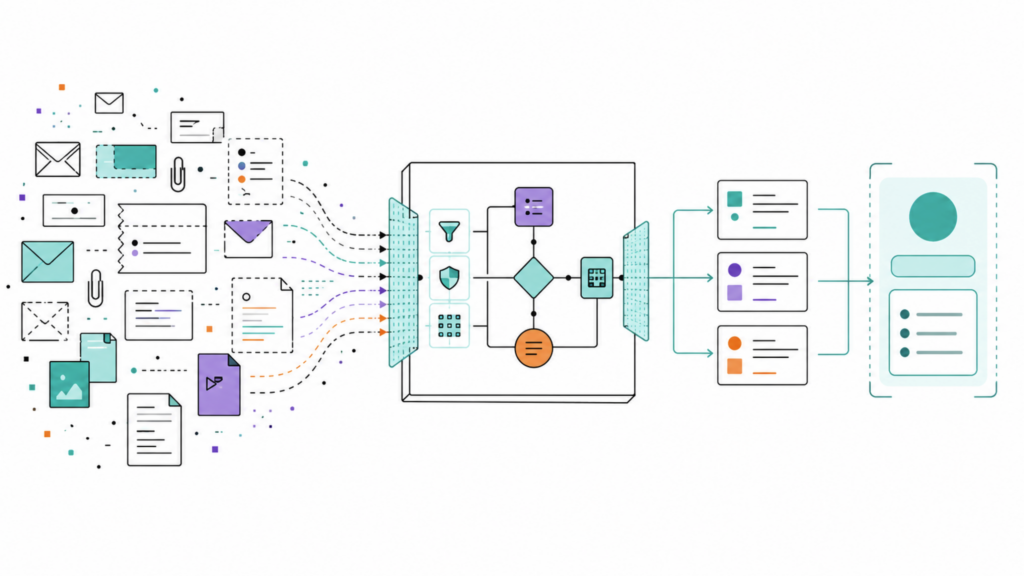
Workato’s IT team connected Claude to internal business systems through Enterprise MCP: Salesforce, Gong, Snowflake, Jira, Gmail, Slack. No new tools for employees. Same AI interface they already had. The difference was that AI could now reach the systems where their actual work lived.
Usage jumped 700%. But the number is not the point. The point is what people started building once AI could see real data and take real action.

Sales reps built Account Intelligence dashboards pulling from Salesforce, Gong, and Slack. CSMs created Portfolio Analytics surfacing at-risk customers across their entire book. Product managers mined months of call transcripts to identify feature requests nobody had flagged.
These were not IT projects. Nobody scoped them, resourced them, or ran them through a steering committee. Employees saw that AI could finally reach their tools and data, and they started solving their own problems.
What One Sales Rep Built in Six Months
Cate Waters is an enterprise account executive at Workato. She is not an engineer. She does not write code. Before Enterprise MCP went live, she did not even know she had a Claude license.
What she has built since then changed how Workato sells into its largest accounts. It also got her promoted to a role advising global companies on their AI strategy. Every piece of it started the same way: she hit a friction point in her day and asked Claude if there was a better way to handle it.
Account intelligence that runs before she does
Cate sells to 40 enterprise accounts. Before a customer call, she used to piece together context the way most reps do: scan Salesforce, skim recent Gong calls, check Slack threads, search Gmail. All separate tabs, all manual.
Now she asks Claude one question. It pulls from every connected system, Salesforce, Gong, Gmail, Google Drive, Slack, and builds a full account profile in minutes. Key contacts, recent interactions, product usage, growth opportunities, and a visual dashboard in Workato brand colors with a countdown to the next meeting.
“I really never leave Claude,” Cate said on a recent LinkedIn session with Workato CIO Carter Busse. “I’m probably 10% of the Claude usage here at Workato.”
25 calls analyzed in 90 seconds
Cate helped Workato’s team rebuild the Gong MCP connector because the native one could not search the way a salesperson actually thinks. The native API searches by endpoint. A seller searches by account, by attendee, by topic, by keyword. Workato rebuilt the connector to match how humans work, not how APIs are structured.
The result: before a meeting with a global financial services prospect, Cate asked Claude what MCP messaging was resonating with financial organizations over the past 90 days. Claude pulled 25 recent calls from Gong, analyzed every transcript, and came back with messaging recommendations, an HTML dashboard of talking points, and a prep brief for the meeting. The whole process took 90 seconds. Listening to those 25 calls would have taken days.
Three systems, one prompt, one dashboard
A customer in Australia challenged Workato: can your AI look across your entire customer base, pull from multiple systems, and give a real answer? Cate took the challenge.
She built a prompt that hit three MCP servers at once. Gong for call transcripts and sentiment analysis. Salesforce for customer data and renewal dates. Jira for open and escalated support tickets. Claude analyzed all three, identified three financial services customers needing attention within 30 days, flagged the ARR at risk, and generated a dashboard showing exactly where each account stood.
The first renewal was 20 days out. Without this, it would have been a manual check across three systems that most teams run quarterly, not daily. With it, an escalation management team could see this every morning.
A financial analysis engine that replaced weeks of work
Cate’s most ambitious build is a six-skill chain that runs a complete financial impact analysis for enterprise prospects. It pulls public financial data, analyzes P&L statements, balance sheets, cash flow, and total shareholder return. Then it identifies where Workato can make an impact on those financials.
The output is not a spreadsheet. It generates three separate presentation decks: one for Workato to present, one reframed for the internal champion to take to their CFO, and one positioned as a consultant-style strategic view with Workato’s product removed from the foreground. Plus a one-pager brief.
The entire process takes 15 minutes. It replaces the kind of analysis that a first-year consultant would spend weeks building. Cate built it herself, skill by skill, each one layered on the one before it.
The Pattern That Matters
Cate did not set out to become Workato’s poster child for AI adoption. She started by asking Claude to turn a wall of text into a dashboard she could actually read. Six months later, she has hundreds of dashboards, a rebuilt sales motion, and a promotion.
The pattern is what CIOs should pay attention to. Cate is not a technologist. She is a sales rep who kept hitting friction and kept asking AI to fix it.
The only reason it worked is that Enterprise MCP gave Claude access to the systems where her actual work happened: Salesforce, Gong, Jira, Gmail, Google Drive. Without that connection, Claude is a drafting tool. With it, Cate built an intelligence operation that runs her entire book of business.
Carter Busse, Workato’s CIO, put it simply:
“This isn’t a vanity metric. This is people fundamentally changing the way they work, and loving it.”
The Real Unlock
Every enterprise has people like Cate. Sales reps, finance analysts, CS managers, legal teams. People with ideas for how to fix broken processes who have never been given the tools to build the solution themselves.
The missing piece is not smarter AI. Claude and ChatGPT are already there. The missing piece is the enterprise layer that connects AI to your business systems with the context, governance, and permissions to let it do real work.
One infrastructure decision gave Cate the ability to rebuild how she sells. Across Workato, that same decision created value in departments IT never planned for.
The question is whether your employees are building, or still drafting better emails.