
AI orchestration for staffing and recruitment is becoming the dividing line between BPOs that turn AI into margin and those stuck running disconnected pilots. If you lead delivery for an RPO, MSP, or recruitment outsourcing operation, the hard part was never choosing an AI model. It’s getting AI to do real work safely across client systems and the entire talent lifecycle. That work happens in the layer above your ATS and VMS, and it’s what this guide is about.
Why staffing and recruitment BPOs hit an automation ceiling
Picture a Monday. A client’s new contractor starts in 48 hours. Your team pulls the record from that client’s ATS, logs into a separate HRIS to create the profile, emails IT to provision access, re-keys the same details into payroll, and updates the VMS by hand. Five systems, none of them connected, and a different five for the next client.
That’s the ceiling. Most BPOs have already bought automation: the ATS automates parts of recruiting, the VMS handles contingent programs, point tools cover screening or scheduling. But a BPO runs a different stack for every client, and those stacks don’t talk to each other. Data gets re-keyed, fragmented, and stale. And AI agents are only as effective as the systems they can access.
It’s a governance problem too. When every client engagement spins up its own integrations and agents, you get shadow agents, inconsistent security, and audit gaps- risks no regulated, multi-client business can accept.
Underneath it all, the economics are shifting. The traditional BPO advantage was labor arbitrage: delivering operations at lower cost and greater scale. The next advantage is agent arbitrage: delivering the same outcomes with AI agents operating under human supervision. Agents only create that advantage if they can act across the systems where work happens. Connecting and governing them is the job of orchestration.

What AI orchestration actually means (and what it isn’t)
AI orchestration is the control layer that enables AI agents, automations, and integrations to work together across your systems- securely and at scale.
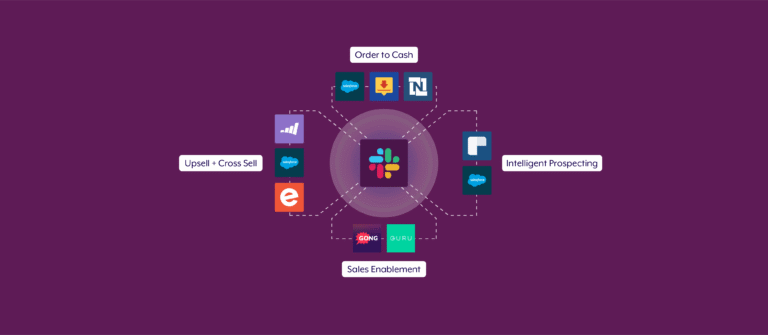
It isn’t another recruiting tool, and it isn’t your ATS. Instead, it sits above the ATS, VMS, HRIS, and payroll systems, making them operate as one.It connects systems, enables AI agents to act across them, governs every agent through security and audit controls, and reuses proven patterns across clients.

The three layers are easy to tell apart once you see them side by side:
| Layer | What it does | What it can’t do alone |
|---|---|---|
| Point tool (e.g., a screening or scheduling app) | Automates one step well | See or act beyond its own box |
| ATS / VMS | System of record for candidates or contingent programs | Coordinate work across the rest of your stack |
| Orchestration layer | Connects every system, runs AI agents across them, governs and audits centrally | – (this is the connective tissue) |
The hard part was never the model. It’s getting AI to act across every client’s systems safely. That’s orchestration.
This distinction matters because most AI pilots don’t fail because of the model. They fail because of missing connectivity, governance, or scale. The model is rarely the blocker.
That’s also how Workato is built, and why it has been recognized as a Leader in both the 2025 Gartner Magic Quadrant and The Forrester Wave, Q3 2025, where it was cited for combining integration, automation, and orchestration in a single platform.
Orchestrating the entire talent lifecycle
The prize isn’t automating one step; it’s connecting the chain. Here’s where it matters at each stage, and the Workato capability that does the work.
Intake and sourcing. Requisitions arrive through emails and portals. Recruiters then search siloed databases by hand. Orchestration standardizes intake, uses AI to draft and post the req, and triggers cross-source sourcing the moment it opens-so search starts in minutes. This is where recruitment process automation shows up first.
Screening, scheduling, and offers. High-volume screening creates backlogs and “black-hole” candidate experiences. Workato’s prebuilt HR & Recruiting Genie, or a custom agent built in Agent Studio, can parse and rank applicants with human-in-the-loop review, acknowledge every applicant, and coordinate interview scheduling across calendars, then move offers and approvals without the email ping-pong.
Onboarding and identity provisioning. This is one of the most common workflows in staffing, and often the fastest path to value. Orchestration runs the full flow across ATS → HRIS → identity provisioning → payroll → VMS → equipment, getting workers billable on day one. It’s the ideal first project precisely because it touches everything, and it’s where low-code Workflow Apps often replace the manual trackers teams have outgrown.
Time, pay, and bill. Margin leaks in the handoffs between the VMS, finance, and payroll. Orchestrating timesheet capture, invoicing, and reconciliation with automated exception handling turns a recurring cost center into a controlled, auditable process.
Compliance and credentialing. Eligibility, credentials, and worker classification span multiple systems and jurisdictions. Meanwhile, regulators are tightening requirements – the EU AI Act, which classifies AI used in recruitment as high-risk, with obligations phasing in through 2026. Workato’s Enterprise MCP control plane connects AI agents to enterprise systems via fully managed, secure-by-design servers and logs their actions, so that document collection, verification, and decisions remain auditable across clients and geographies.
Redeployment and offboarding. Redeployment is the revenue-proximate stage worth pulling forward: Agent Orchestration detects upcoming assignment, ends across the VMS and ATS, matches workers to live roles, and triggers outreach before talent drifts away. Offboarding runs the same path in reverse, instantly revoking access to close the security gaps manual processes leave behind.
Where to start: the BPO priority tiers
You can’t orchestrate everything at once, and you shouldn’t. Sequence the work in tiers, each funding the next.

- Tier 0 – Foundation and governance (start here). Clean, synced data across the ATS, HRIS, and VMS (built on Workato’s Data Orchestration), plus a governed AI control plane that secures agents across clients. For a BPO, the benefits compound with every client, making this the highest-return starting point.
- Tier 1 – High-frequency delivery operations. Contingent onboarding and offboarding, compliance, and time, pay, and bill processing- the workflows that recur with every engagement and help protect margins.
- Tier 2 – Front-office recruiting (the scale wave). Sourcing, screening, engagement, scheduling, and redeployment: high value, and where AI agents for recruiting pay off most once the foundation is in place.
- Tier 3 – Client-facing and planning. Hiring-manager communication, new-business pipeline, and workforce demand forecasting.
Start at Tier 0 because every later win compounds when it’s built on the same connected, governed fabric rather than another silo.
Why the orchestration layer has to be enterprise-grade
For a multi-client BPO, the layer that touches every client’s systems and runs AI on their data has to clear a high bar-and this is where the platform choice is decided, not the model.

Workato connects to 14,000+ applications through 1,200+ prebuilt connectors, with 100+ prebuilt Enterprise MCP servers giving AI agents governed access to enterprise systems. It is certified to SOC 2 Type II, ISO 27001, HIPAA, and PCI-DSS. It also provides EU data sovereignty for core AI features and a cloud-native architecture backed by a 99.98% uptime SLA. That combination- broad connectivity, agent governance, and enterprise security on one platform is what lets you stand up AI for a new client without rebuilding governance each time.
Turn AI into your next operating advantage
For staffing and recruitment BPOs, AI orchestration is what turns agent arbitrage into reality – across the talent lifecycle, across every client, and at scale. The model is the easy part. Connecting it to the work is the advantage.
Get a Demo to see how Workato orchestrates AI agents, data, and workflows across your clients- on one governed platform.
FAQ – Frequently Asked Questions
What is AI orchestration for staffing and recruitment?
AI orchestration is the control layer that enables AI agents, automations, and integrations to work together across the systems used to deliver recruitment services- including ATS, HRIS, VMS, CRM, and payroll.
For BPOs, it coordinates work across multiple client environments, allowing AI to complete real tasks across the full talent lifecycle- not just generate suggestions.
How is it different from recruitment automation software or an ATS?
An ATS automates steps inside its own system. Orchestration is the layer above all your systems: it connects them, coordinates multi-step and multi-agent work, and enforces security and audit. It doesn’t replace your ATS or VMS- it makes the whole stack work as one.
What’s the best first use case for a staffing or recruitment BPO?
Start with a clean data foundation (ATS/HRIS/VMS integration) and a governed AI control plane, then automate contingent worker onboarding and offboarding. Onboarding is high-frequency, touches every system, and delivers immediate, visible value.
How does AI orchestration handle multiple clients and compliance?
A governed control plane built on Enterprise MCP applies per-agent access, client-by-client data separation, and audit logging, on a platform certified to SOC 2 Type II, ISO 27001, HIPAA, and PCI-DSS. Logging what agents do supports compliance obligations, including the EU AI Act across clients and geographies.
Do we need to replace our ATS, VMS, or payroll system?
No. Orchestration connects and coordinates the systems you and your clients already use-the goal is to make a fragmented stack operate as one, not to rip and replace systems of record.
How does it support contingent workforce management?
It unifies the VMS, ATS, HRIS, and payroll so contractor data stays clean, automates onboarding and time/pay/bill, monitors compliance and credential expirations, and triggers redeployment before assignments end.
How quickly can a BPO see value?
Because orchestration runs on prebuilt connectors and reusable patterns, a focused first workflow, such as onboarding for one client, can typically go live in weeks, then scale across clients from there.