
Agentic AI in the Philippines has outrun the governance required to operate it. Per Microsoft’s 2025 Work Trend Index, 89% of Philippine business leaders expected AI agents to work alongside employees as digital teammates within 12 to 18 months, yet most enterprise agent deployments remain stuck in pilot because no layer exists to control what those agents can see, access, and do. The gap is architectural, not experimental. Enterprises that treat agentic AI as a procurement exercise — buy an assistant, run a proof of concept, present a demo — accumulate pilots. Enterprises that treat it as an infrastructure exercise build an AI control plane first, then scale agents on top of it. Workato Enterprise MCP is that control plane: it gives every agent Orchestrated Context, Trust & Security, and Enterprise Skills, which is precisely the layer Philippine CIOs are missing when their pilots stall at the security review.
What is agentic AI in the enterprise?
Agentic AI is software that plans and executes multi-step business tasks on its own, rather than generating answers to prompts. A generative assistant drafts the collections email; an agent checks the customer’s balance in SAP, applies the dunning policy, sends the email through Outlook, and logs the action in Salesforce. That distinction — acting versus answering — is what makes agentic AI valuable and what makes it dangerous without governance.
Why the distinction matters for Philippine enterprises
The Philippine market has moved past the chatbot phase quickly because the country’s largest industries run on high-volume, repeatable processes. The IT and business process management (IT-BPM) sector alone is projected to reach roughly $42 billion in revenue and 1.97 million workers in 2026, and every one of those workflows — claims intake, order management, payroll queries, collections — is a candidate for agentic execution. An agent that acts on live enterprise systems at that scale is an operational actor, and operational actors need the same controls you apply to employees: identity, permissions, and an audit trail.
Why are PH AI pilots stalling?
Philippine AI pilots stall because agents that perform well in a sandbox fail the questions that come after the demo: who approved this agent’s access, which systems can it write to, and who is accountable when it acts incorrectly. The pattern repeats across Manila, Cebu, and the GCC corridor — an innovation team wires an agent to two or three APIs, the demo lands, and then the CISO and the data privacy officer ask for access controls, audit logs, and a rollback plan that the pilot was never built to provide.
The three failure points
First, raw API access: pilots typically hand agents direct API credentials, which means the agent inherits broad system permissions no security team will approve for production. Second, no shared context layer: each pilot builds its own retrieval and data plumbing, so nothing transfers to the next use case and every new agent restarts from zero. Third, no audit story: when an agent touches customer data governed by the Data Privacy Act of 2012, the enterprise must show what was accessed and why — and most pilots cannot. These are not model problems; they are control plane problems, and more pilots do not solve them.
What is an AI control plane?
An AI control plane is the governance and execution layer that sits between AI agents and enterprise systems, controlling what agents can access, what actions they can take, and how every action is logged. It plays the same role for agents that identity and access management plays for employees: a single point where permissions are defined, enforced, and audited — regardless of which model or vendor the agent runs on.
The three capabilities a control plane must provide
Workato Enterprise MCP defines the control plane around three pillars. Orchestrated Context delivers governed, real-time business data to agents so they reason from live system state, not stale exports. Trust & Security enforces identity, permissions, and full audit trails on every agent action. Enterprise Skills replaces raw API access with proven, packaged business actions — an agent gets “issue a refund under ₱5,000 with manager notification,” not open access to the payments API. Skills, not prompts, is the difference between an agent a CISO blocks and an agent a CISO approves.
Agentic AI adoption in the Philippines
Agentic AI adoption in the Philippines is led by telecommunications, banking, and the BPO sector — the industries with the transaction volumes to justify autonomous execution. PLDT has publicly deployed agentic AI (its ERICA risk-management agent went live in March 2026), signaling that the country’s largest enterprises have moved from evaluation to production intent. Philippine business leaders were ahead of the global curve on expectations: Microsoft’s 2025 Work Trend Index, which found 89% anticipating digital teammates within 12–18 months, placed the Philippines among the most agent-optimistic markets surveyed.
What the leaders share
The enterprises moving fastest share one trait: they already operate integration infrastructure that agents can plug into. Workato customers in the Philippines, including Jollibee and Philippine Airlines, built orchestration foundations across ERP, CRM, and operational systems — which means their agents inherit governed connectivity instead of building it per pilot. Adoption follows infrastructure, and infrastructure is exactly what pilot-first programs skip.
Why BPOs lead agentic adoption
BPO and shared services operators lead Philippine agentic adoption because their economics reward it most directly. When revenue is priced per transaction, per seat, or per resolved ticket, an agent that autonomously executes 40% of a workflow changes the margin structure of the contract — and clients are already asking providers to show an AI delivery model in renewals. The IT-BPM sector’s 1.97 million workers make the Philippines the global proving ground for human-plus-agent operating models.
The provider’s dilemma
BPO leaders face a governance problem their onshore clients feel acutely: agents acting on client systems must satisfy the client’s security and compliance regime, not just the provider’s. A control plane resolves this cleanly — Enterprise Skills scope exactly what an agent can do on client systems, Trust & Security produces the audit evidence clients demand, and Orchestrated Context keeps client data governed rather than scattered across pilot infrastructure. Providers that show up to renewals with a governed agent architecture win the AI conversation; providers with a slide of pilots do not.
The risk of ungoverned AI agents
Ungoverned agents expose Philippine enterprises to three concrete risks: data privacy violations, unauditable actions, and vendor lock-in at the model layer. The National Privacy Commission holds enterprises accountable for how personal data is processed, and an agent with raw API access processes personal data in ways nobody can reconstruct after the fact. For BSP-supervised institutions, the bar is higher still — outsourced and automated processes carry explicit accountability and auditability expectations that an ungoverned agent architecture cannot meet.
Lock-in is the quiet risk
The less-discussed risk is strategic. Enterprises that build agent logic directly against one model vendor’s stack are betting their operating model on that vendor’s roadmap and pricing. A control plane decouples the two: agents, models, and tools change; the governance layer, the skills library, and the audit trail persist. That separation is what makes agentic AI an asset rather than a liability on the balance sheet of technical debt.
How Enterprise MCP governs AI agents
Workato Enterprise MCP makes AI agents enterprise-ready by giving them governed context, enforced trust, and proven skills — the three pillars, delivered on the same Workato ONE platform that already orchestrates the enterprise’s applications.
Orchestrated Context
Agents reason only as well as the data they are given. Enterprise MCP delivers real-time, governed context from the systems Workato already connects — ERP, CRM, HRIS, ITSM, banking interfaces — so an agent handling a Philippine Airlines-scale operation or a Jollibee-scale supply chain works from live business state with access rules enforced at the context layer.
Trust & Security
Every agent action carries identity, runs against role-based permissions, and lands in an audit log. This is the pillar that converts the CISO from blocker to sponsor: the security review stops being “prove this agent is safe” and becomes “confirm the control plane policies are correct.” Workato’s governance model — role-based access, environment management, audit logging, SOC 2 Type II — extends to agents natively rather than being bolted on.
Enterprise Skills
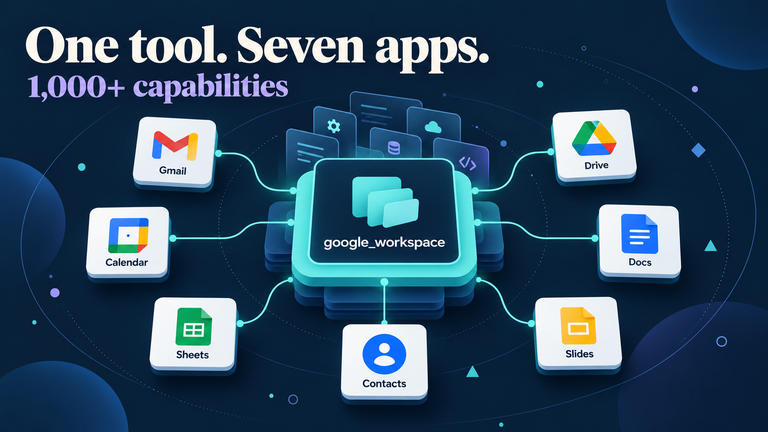
Skills are packaged, tested business actions built as Workato recipes and exposed to agents as governed capabilities. “Give agents proven business actions — not raw APIs” is the operating principle: a skill encodes the business rules, approval thresholds, and error handling that a raw API call ignores. One recipe becomes a skill; one skill serves every agent that needs it. That reuse is why control-plane programs compound while pilot programs reset.
How do CIOs build the business case?
CIOs justify an AI control plane on four value drivers: agility, efficiency, risk reduction, and revenue. Agility — new agent use cases deploy in days on shared infrastructure instead of months of per-pilot plumbing. Efficiency — one governed skills library replaces N sets of duplicate integration work across pilots. Risk reduction — audit trails and permissioned actions satisfy NPC and BSP expectations before regulators ask. Revenue — for BPO and GCC operators specifically, a governed agent architecture is now a commercial differentiator in client renewals, not just an internal efficiency play.
The counterintuitive math
The instinct is that governance slows AI down. The Philippine pilot record shows the opposite: ungoverned pilots are fast to demo and slow to production, because every one of them eventually queues at the same security and compliance gate. A control plane moves that gate to the front of the process once, then every subsequent agent passes through it by default. Governance, done as infrastructure, is the speed play.
How to move from pilot to production
Philippine enterprises move agents into production by inverting the usual sequence: stand up the control plane first, then scale use cases onto it. The working pattern is four steps. One, pick two production-intent use cases with measurable outcomes — collections follow-up, IT service fulfillment, order exception handling. Two, deploy Enterprise MCP as the governance layer and define the skills those use cases need as Workato recipes. Three, run the security and privacy review against the control plane once, with the CISO and DPO in the room from week one. Four, scale horizontally — each new agent reuses the context layer, the trust framework, and the growing skills library, which is why the third use case ships faster than the first.
What to stop doing
Stop approving pilots that hand agents raw API credentials, stop letting each business unit build its own agent plumbing, and stop measuring AI progress in pilot count. The metric that matters in 2026 is governed actions in production — and that number only moves with a control plane underneath it.
FAQ
What is the difference between agentic AI and generative AI?
Generative AI produces content in response to prompts; agentic AI plans and executes multi-step tasks across business systems autonomously. The enterprise implication is governance: a text generator needs quality review, while an agent that acts on ERP, CRM, and banking systems needs identity, permissions, and audit trails — an AI control plane.
What is Workato Enterprise MCP?
Workato Enterprise MCP is the control plane that makes AI agents secure, scalable, and accurate. It provides Orchestrated Context (governed real-time business data), Trust & Security (identity, permissions, audit trails on every action), and Enterprise Skills (proven business actions instead of raw API access), built on the Workato ONE platform.
Which Philippine industries are adopting agentic AI fastest?
Telecommunications, banking, and the BPO/shared services sector lead Philippine agentic adoption. PLDT has deployed an agentic assistant publicly, and BPO providers are moving fastest because per-transaction economics reward autonomous execution and clients now expect an AI delivery model in contract renewals.
Do AI agents comply with the Data Privacy Act?
AI agents comply with the Data Privacy Act only when the enterprise can demonstrate what data each agent accessed, under what authority, and for what purpose. Ungoverned agents with raw API access cannot produce that evidence. A control plane enforces permissions and generates the audit trail the National Privacy Commission expects.
How long does deploying an AI control plane take?
Enterprises deploy Workato Enterprise MCP and ship their first governed agent use cases in weeks, not quarters, because the control plane builds on existing Workato connectivity — 1,200+ connectors with full CRUD operations. The first use case carries the setup; subsequent agents reuse the context, trust, and skills layers.
Summary: control plane first, agents second
- The bottom line: Philippine enterprises do not have an AI ambition gap — Microsoft’s 2025 Work Trend Index found 89% of business leaders expecting digital teammates within 18 months — they have a governance gap, and more pilots will not close it. The enterprises that scale agentic AI in 2026 are the ones that deploy an AI control plane before they deploy their tenth agent.
- Agentic AI acts on business systems, so it requires the controls of an operational actor: identity, permissions, audit.
- Pilots stall at the security review because raw API access, per-pilot plumbing, and missing audit trails are architectural defects, not model defects.
- An AI control plane — Orchestrated Context, Trust & Security, Enterprise Skills — turns the security gate into a one-time investment every subsequent agent inherits.
- BPO and GCC operators gain a commercial edge: governed agent architecture is now a renewal-winning differentiator, not just an internal efficiency.
- Workato Enterprise MCP delivers the control plane on the same Workato ONE platform that already orchestrates the enterprise’s applications.