
OpenAI’s Frontier announcement this week generated significant attention in the enterprise AI space. As a partner who orchestrates OpenAI models through our Enterprise MCP platform, we’re excited to see increased focus on making AI agents production-ready for enterprises. It also raises an important architectural question worth clarifying: what’s the difference between an AI model platform and an enterprise integration platform, and why does that distinction matter?
Two Different Problems, Two Different Solutions
OpenAI builds exceptional AI models. That’s not up for debate. GPT-4, o1, and o3 represent genuine breakthroughs in reasoning capabilities. Frontier extends this strength by offering enterprises priority access to these models alongside Forward Deployed Engineers who can help architect custom AI solutions.
Workato solves a different problem: connecting AI agents to the complex web of enterprise systems where work actually happens. We’ve spent 12 years building production-grade integrations to 1,200+ enterprise applications, handling the authentication, error recovery, data transformation, and API maintenance that makes cross-system automation reliable at scale.
These aren’t competing capabilities. They’re complementary layers in an enterprise AI stack.
The Integration Reality Check
Here’s what we hear from enterprises deploying AI agents: the hard part isn’t getting an AI to generate a smart response. The hard part is getting that AI to reliably read customer data from Salesforce, check inventory in NetSuite, create a ticket in ServiceNow, and update the project timeline in Jira with proper authentication, governance, audit trails, and error handling throughout.
Building production-grade enterprise connectors is expensive work. Each system requires handling authentication protocols, rate limiting, pagination, schema changes, and thousands of edge cases. Industry estimates put the cost at $50K-$150K per connector, plus 20-30% annual maintenance as APIs evolve. For an enterprise connecting AI agents to ten core systems, that’s potentially $500K-$1.5M in integration work before the first agent workflow goes live.
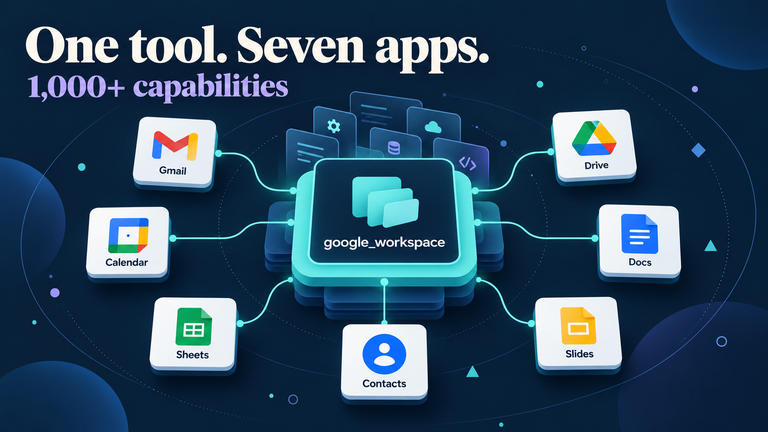
That’s the investment Workato’s 1,200+ pre-built connectors eliminate. We’re shipping 100+ production-ready MCP servers throughout 2026, starting with Slack, Jira, Salesforce, GitHub, Gong, Google Sheets, Okta, and more. Each includes enterprise-grade authentication, error handling, and ongoing API maintenance already built in.
Model Flexibility Matters
Enterprise AI strategy is increasingly model-agnostic. The frontier of AI capabilities moves quickly, and different models excel at different tasks. Anthropic’s Claude might be superior for certain analysis work, while OpenAI’s o3 might excel at complex reasoning, and Google’s Gemini might offer advantages for multimodal tasks.
Workato is built on the open MCP (Model Context Protocol) standard. Our platform works with Claude, ChatGPT, Gemini, and custom models. As new capabilities emerge, enterprises can adopt them without rebuilding their integration infrastructure. This flexibility is especially valuable given how rapidly the AI landscape evolves.
The Governance Layer Enterprises Actually Need
When AI agents start taking actions across production systems, governance becomes critical. IT security and compliance teams need to know:
- Who authorized each action the agent took?
- What data did the agent access across which systems?
- Did the agent respect the requesting user’s permission levels, or did it act with elevated privileges?
- Can we audit the complete cross-system workflow in one place?
Workato’s two-layer security model (role-based access control plus Verified User Access) ensures agents inherit the requesting user’s exact permissions in each connected system. When a sales rep’s agent pulls customer data from Salesforce and updates an opportunity, it can only access records that rep would normally see. The agent doesn’t use a shared service account with admin privileges that could access everything.
This isn’t a feature we added for AI agents. It’s infrastructure we’ve been hardening for 12 years across 12,000+ enterprise customers, including 50% of the Fortune 500.
The Partnership Angle
Here’s the crucial point: Workato and OpenAI aren’t mutually exclusive.
Workato orchestrates OpenAI models through MCP today. Many of our customers use OpenAI’s reasoning capabilities for AI agents that Workato connects to their enterprise systems. You can absolutely use OpenAI’s models for their exceptional reasoning power, orchestrated through Workato for enterprise integration, governance, and scale.
For enterprises already committed to OpenAI’s models, Workato provides the production infrastructure that makes those models work reliably across your enterprise systems with the integrations, orchestration, security, and governance you need in production.
Speed to Production Value
Time-to-value matters. Workato customers deploy production-ready agent workflows in days or weeks using our pre-built MCP servers and existing integration library. Our 900,000+ existing automation recipes can become agent skills immediately.
High-touch engineering services from Forward Deployed Engineers can deliver tremendous value for complex, novel AI applications. But for many enterprise use cases (automating common workflows across well-understood systems) pre-built infrastructure gets you to production faster without external dependencies for every deployment.
What This Means for Your AI Strategy
If your primary challenge is pushing the boundaries of AI reasoning for novel applications with custom model fine-tuning and proprietary training pipelines, Frontier’s deep engineering support and priority model access make sense.
Conversely, if your primary challenge is getting AI agents to reliably automate work across your enterprise systems with governance, security, audit trails, and the ability to scale beyond the initial use case, an integration platform purpose-built for enterprise orchestration makes sense.
And if you need both? The platform approach gives you the flexibility to use the best AI models for each task while building on proven integration and orchestration infrastructure.
The question isn’t whose AI is smarter. The question is which architecture gets AI working productively across your enterprise securely, at scale, and without re-engineering your integration layer every time the model landscape shifts.
Want to see how enterprise MCP works in practice? Schedule a demo today.