
I get to work with some pretty unique IT thought leaders, and recently added one to the list who has seen every major technology wave from the inside. Mark Settle, a seven-time CIO with tenures at companies like Okta and BMC Software, a three-time CIO 100 honoree, and the author of Truth from the Trenches: A Practical Guide to the Art of IT Management, spoke at a Workᴬᴵ event I hosted online. Mark sits on the advisory boards of several venture capital firms and authors The Modern CIO Newsletter.
His message was equal parts grounding and galvanizing: agentic AI is both an incremental evolution and a tectonic shift — and for IT leaders, the opportunity to lead through it may not come around again.
Having been through the major waves of cloud, mobile, SaaS, RPA, no-code, Mark could easily write off agentic AI as the next chapter in a long series of automation advances. But he made an equally compelling case that something structurally different is happening this time, from AI-optimized inference chips at the bottom of the stack all the way up to the application layer, where software is being reimagined as collaborative, interacting agents. His conclusion: both perspectives are true simultaneously, and the data backs it up.
Agentic AI Removes Constraints
Working with Mark on his keynote reframed how I think about where the real AI opportunity lies. Virtually every business process in existence today is shaped by three constraints: human bandwidth, information availability, and timing limitations. Humans sleep, go on vacation, become engrossed in all-consuming projects, and can only focus on so many things at once.
Agentic AI changes the game. There’s no ceiling on the number of agents you can deploy. Agents have access to broader, more current information than any individual or team. And agents work 24/7, unaffected by time zones, national holidays, or competing priorities.
The question Mark challenges us to ask isn’t how do we automate what we already do? But instead, how would we redesign these processes entirely if those constraints no longer existed?
Three Processes Worth Reimagining with Agentic AI
This came to life with concrete examples that any IT leader can take back to their organization. While the possibilities are infinite and your business will have its unique opportunities to explore, he offered three obvious areas as “food for thought”.

In consumer marketing, instead of maintaining a few dozen customer personas, companies could deploy hundreds of AI personas to sharpen targeting and simulate product feedback — replacing slow customer surveys with real-time, AI-generated affinity group responses that inform both marketing and product development simultaneously.
Customer experience is ripe for disruption. For example, instead of shared call centers and generalized training, every single end user at a new customer account could have a dedicated onboarding agent that adapts in real time to their usage patterns, surfaces features they haven’t explored, and drives the deep product adoption that reduces churn at renewal time. A win for customers, and a win for revenue retention.
And in IT service desk operations, rather than the entirely reactive model most organizations run today. Gone are the days of waiting for employees to report problems and then working through a backlog of tickets. Now AI agents can monitor core applications continuously, detect historically problematic conditions, and remediate them before employees are ever impacted. As Mark put it, the entire operating model flips from processing tickets to eliminating productivity threats.
CIOs Must Prepare for Multi-agent Systems
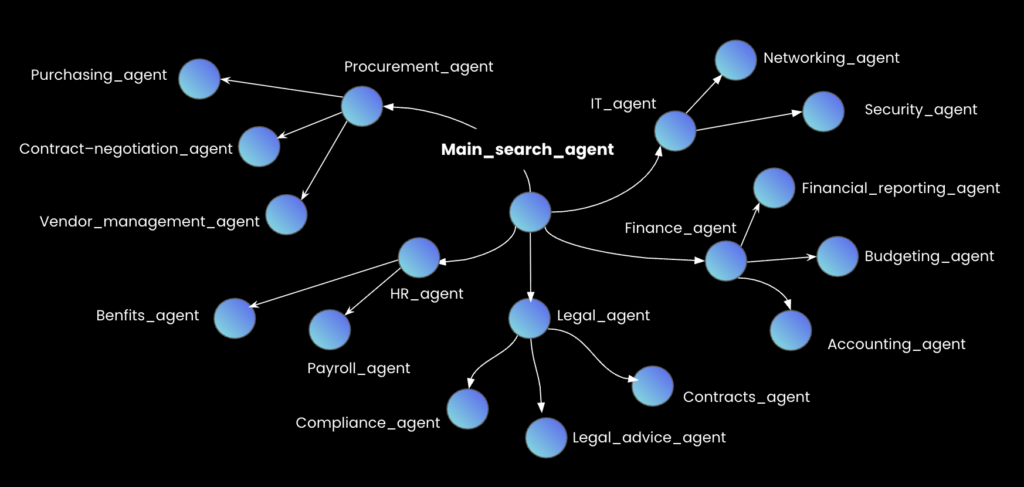
Multi-agent systems, that is, networks of AI agents that interact, exchange information, and task one another in coordinated workflows, represent a greenfield frontier for enterprise IT.
While the category is still nascent, analysts like Gartner are already tracking it closely. Critically, this market is likely to evolve as a multi-sourced ecosystem: a mix of vendor-built solutions, DIY implementations, and emerging agent marketplaces. CIOs who begin building familiarity with these architectures now will be far better positioned to govern, integrate, and scale them as the tooling matures.
IT Leaders Need to Own AI Governance, Security, and Trust.
Mark was direct about three significant hurdles standing between organizations and effective agentic AI deployment. They revolve around three themes: Governance, Security, and Trust.

Governance – Most existing frameworks built before AI will require net-new practices rather than simple amendments. Autonomous agents that make decisions on behalf of the business change the governance surface area in ways legacy frameworks simply weren’t designed to handle.
Security – CIOs face a dual obligation: auditing internal AI use for vulnerabilities around IP and compliance, while simultaneously reassessing the external threat landscape. Bad actors are adopting AI too, shifting the hierarchy of cyber risks in ways that existing defenses may not yet reflect.
Trust – Unlike traditional software with predictable outputs, LLMs introduce inherent uncertainty. New research underscores the gap: 82% of organizations in a recent HBR survey data only trusted agentic AI when humans remained in the loop, and just 6% trusted it to autonomously handle core processes. Closing that gap requires IT teams to build new competencies around monitoring agent accuracy, output quality, and decision integrity, not just system uptime.
His closing message was unambiguous: technology shifts of this magnitude are rare. IT leaders who lean in now, and push bold thinking inside their organizations, serve as both technical counselors and business partners. These are the leaders who will stay close to how peers are deploying these tools, and will be positioned to advance not just their companies, but their own careers.
This moment won’t wait. Hear how today’s most forward-thinking CIOs are turning agentic AI from a concept into a competitive advantage.