
This session was part of Work^AI: Architect an Agentic Future, a virtual event bringing together IT, Business Technology, and Data leaders to explore how orchestration, Enterprise MCP, and agentic AI are transforming the enterprise.
Watch this session and more from the Work^AI event on demand →
Architect an Agentic Future with Enterprise MCP
Enterprises are racing toward an agentic future. CIOs want predictable, safe adoption. Developers want a path to production. Business leaders want measurable impact. Everyone sees the potential—but the path forward is anything but clear.
Agent implementations today are fragmented and brittle: LLMs are wired manually to APIs, workflows behave unpredictably, and shadow AI spreads without oversight. The Model Context Protocol (MCP) promised a universal interface, but raw MCP lacks the enterprise safeguards needed for agents to operate inside critical systems with trust and control.
To architect an agentic future, organizations need Enterprise MCP: a governed, explainable, identity-aware foundation that transforms agentic AI from experimental to operational.
The Protocol vs. The Platform: Why MCP Needs an Enterprise Layer
MCP emerged as HTTP for agentic AI—a standardized way for intelligent clients to discover and call capabilities across systems. Developers created 2,000+ open source MCP servers within months. Tools like Claude Desktop and Cursor adopted it early. The momentum is real.
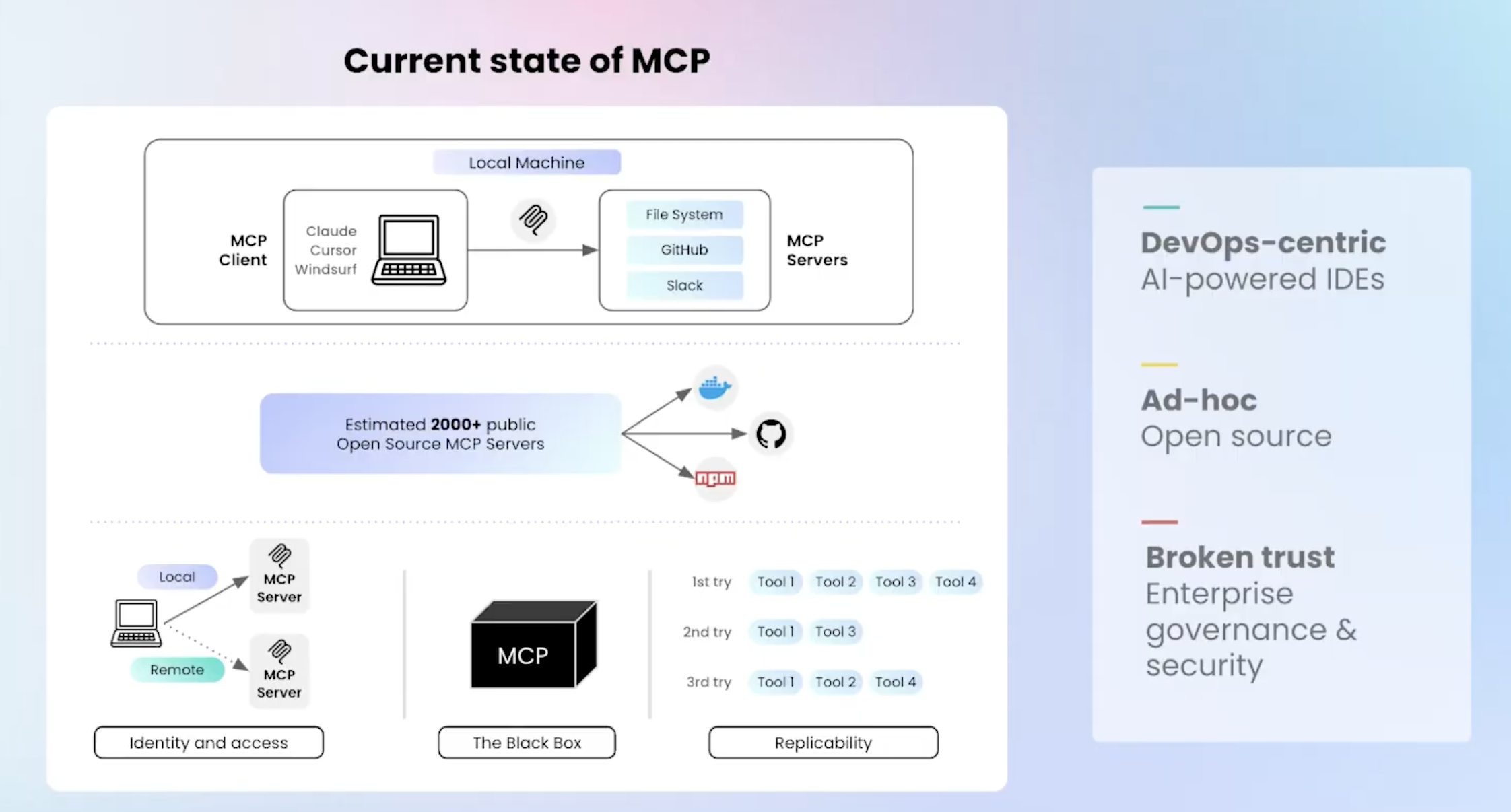
But rapid growth exposed critical gaps. MCP servers vary wildly in quality. Most expose raw API wrappers without identity enforcement, audit trails, or business context. This creates three fundamental problems that prevent MCP from working in real enterprise environments:
| Gap | Enterprise Impact |
|---|---|
| No Identity & Access Control | Raw MCP does not enforce user identity, role-based permissions, or data entitlements. Enterprises cannot rely on broad service accounts for agents that interact with HR, finance, or customer systems. |
| Zero Explainability | Most MCP implementations offer no audit logs or traceability. Enterprises need to know exactly what an agent did, why it did it, and what data it acted on. |
| Granular Tools, Not Business Skills | LLMs combine dozens of low-level API calls into brittle workflows with inconsistent results and bloated context windows that degrade slow agent performance. |
MCP is the right protocol. But without an enterprise layer, it cannot support mission-critical automation.
Three Roles, Three Breaking Points
These gaps manifest differently depending on who’s trying to deploy agents:
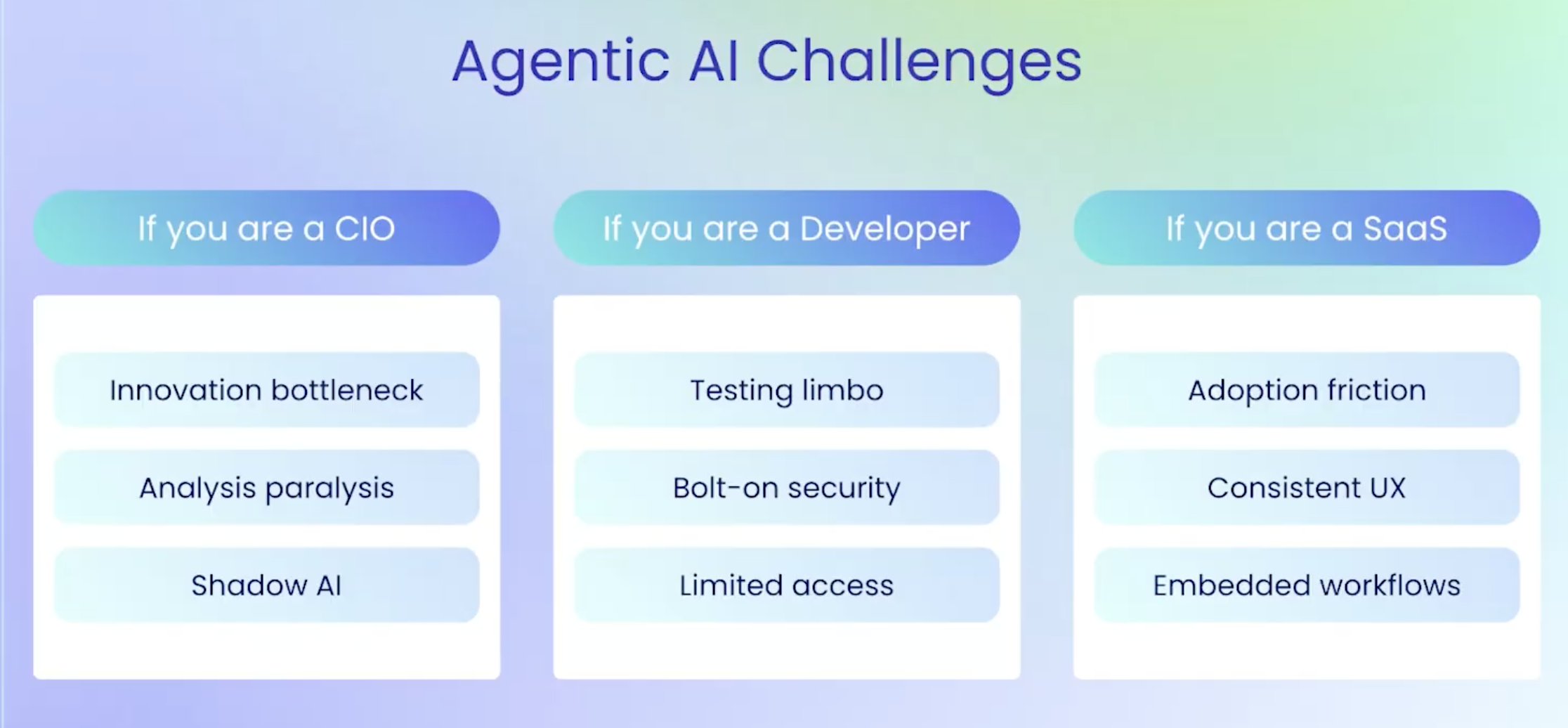
CIOs face the innovation-governance trap
The business demands AI transformation while maintaining security and compliance. Result: IT is perceived as slowing innovation, even as unauthorized shadow AI spreads. CIOs need a way to accelerate AI safely, becoming catalysts rather than gatekeepers.
✅ How Workato Enterprise MCP solves: Gives CIOs a governed, auditable framework so they can become catalysts for innovation on their own terms.
Developers hit the production wall
Demos work great. Production means endless testing cycles, security retrofitted at the last minute, fragile connections to backend systems, and limited data access controlled by IT. Developers need governed, enterprise-grade systems they can build on without recreating identity, logging, and orchestration every time.
✅ How Workato Enterprise MCP solves: Enterprise MCP lets developers focus on delivering value by turning APIs and workflows into safe, reusable enterprise skills instead of boilerplate work.
SaaS vendors struggle with cohesion
They want to expose functionality through MCP but face adoption friction, inconsistent user experiences, and difficulty embedding end-to-end workflows instead of just APIs. Vendors need to deliver business capabilities, not low-level operations.
✅ How Workato Enterprise MCP solves: Enterprise MCP allows SaaS vendors to deliver AI-ready, packaged experiences that customers can adopt quickly and safely.
All three need the same thing: an architectural layer that makes MCP enterprise-ready.
Enterprise MCP: The Non-Negotiables
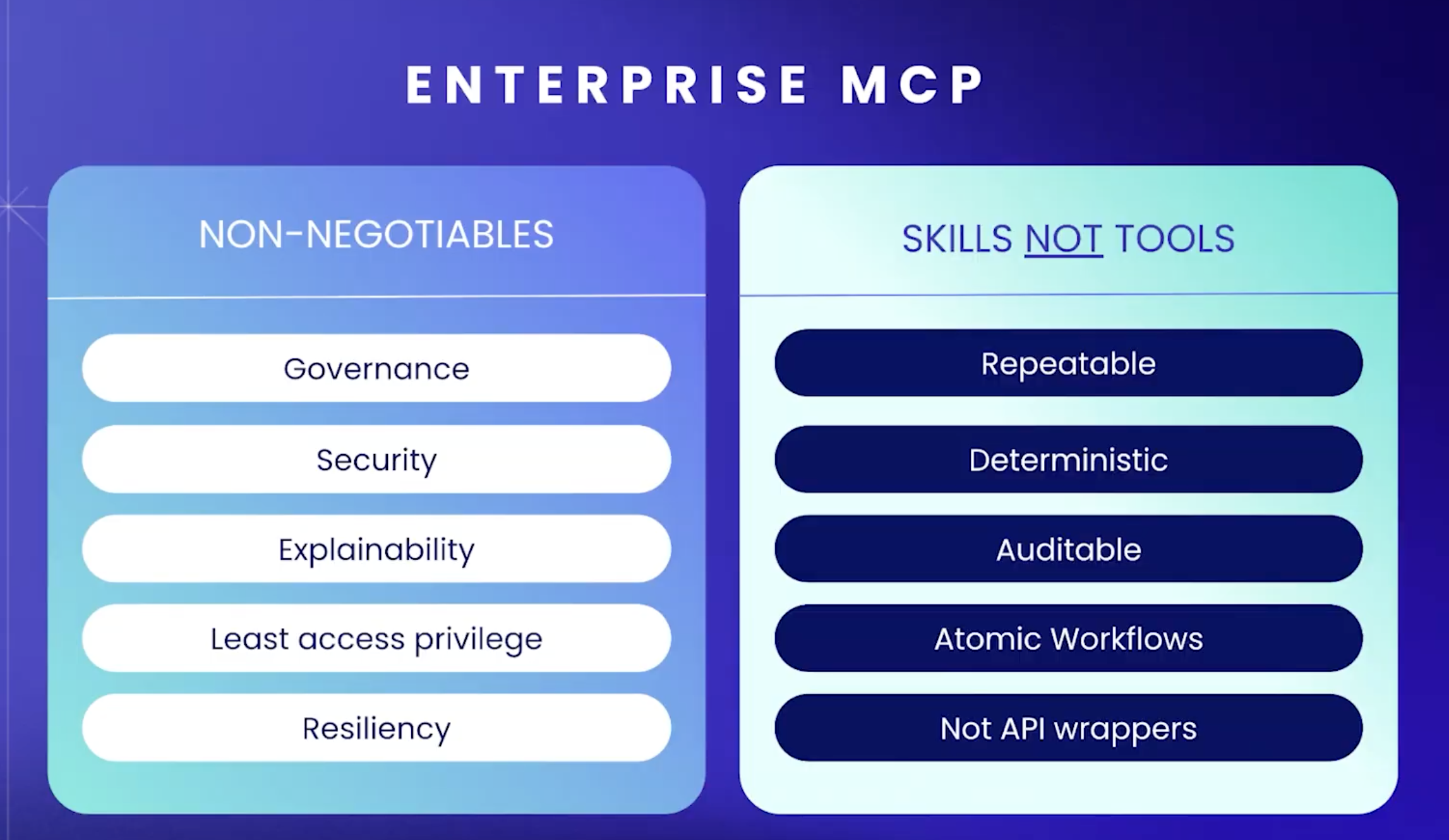
To move MCP from hobbyist excitement to enterprise reality, a new architectural layer is required. Enterprise MCP transforms raw protocol access into governed business capability.
Four core pillars make this possible:
1. Security, Governance, and Resiliency
RBAC, encryption, audit logs, compliance controls, and global uptime ensure every AI action is safe, secure, and compliant with your company’s policies and regulations. Table stakes that raw MCP doesn’t provide.
2. Explainability
Every agent action requires traceability—inputs, logic, outputs. This builds trust and allows teams to review, validate, and iterate safely.
3. Least Access Privilege
Agents inherit the identity and entitlements of the user they represent. No broad service accounts. No excessive privileges.
4. Skills > Tools
An Enterprise Skill is a complete, standalone business action—like “process refund” or “onboard employee”—that executes accurately every time. This is where Enterprise MCP fundamentally differs from raw protocol implementation.
Enterprise Skills make AI agents accurate, predictable and trusted by giving them proven business actions instead of forcing them to improvise with raw APIs.
Example: Instead of an agent orchestrating 7+ separate API calls that might fail or vary each time, it simply uses the “process customer refund” skill—which handles validation, payment, notifications, and rollback automatically.
Skills, Not Tools: The Foundation of Enterprise MCP
Raw MCP servers often expose granular tools. These work for demos but break in the enterprise, where agents cannot safely infer multi-step business logic from low-level operations. Enterprise MCP must elevate tools into skills: stable, contextual, end-to-end business actions.
Why Skills Matter
- Reduce cognitive load: Agents don’t figure out sequencing, validation, and error handling on their own
- Prevent context window overload: Too many granular tools clutter the LLM, increasing noise and decreasing reliability
- Keep critical processes stable: Payment posting, access revocation, invoice creation require predictable, governed outcomes
What Makes a Skill “Enterprise Grade”
Enterprise skills are secure, transactional, resilient, and explainable. They encapsulate the full business workflow—not just a single API call. They enforce identity, run validations, manage state, handle retries, and generate audit logs.
Examples: contract creation, expense approval, payment posting, refund processing, access revocation, invoice generation, MFA reset.
Skills solve the core challenge: they protect systems by mediating all actions, make agent behavior predictable, and enable scale through reusable building blocks.
These represent complete, governed business actions that agents can call safely and consistently.
Why Skills Unlock the Agentic Enterprise
Skills solve the core challenges of enterprise AI:
- They protect systems by mediating all actions
- They make agent behavior predictable
- They enable scale by creating reusable building blocks
Raw MCP provides the protocol. Skills provide the business capability. Enterprise MCP provides the trust layer that binds it all together.
Skills are how enterprises move from experimentation to reliable agentic automation.
Workato: The Platform That Makes MCP Enterprise Ready
Workato provides the complete Enterprise MCP layer needed to deploy safe, scalable, production-grade agents.
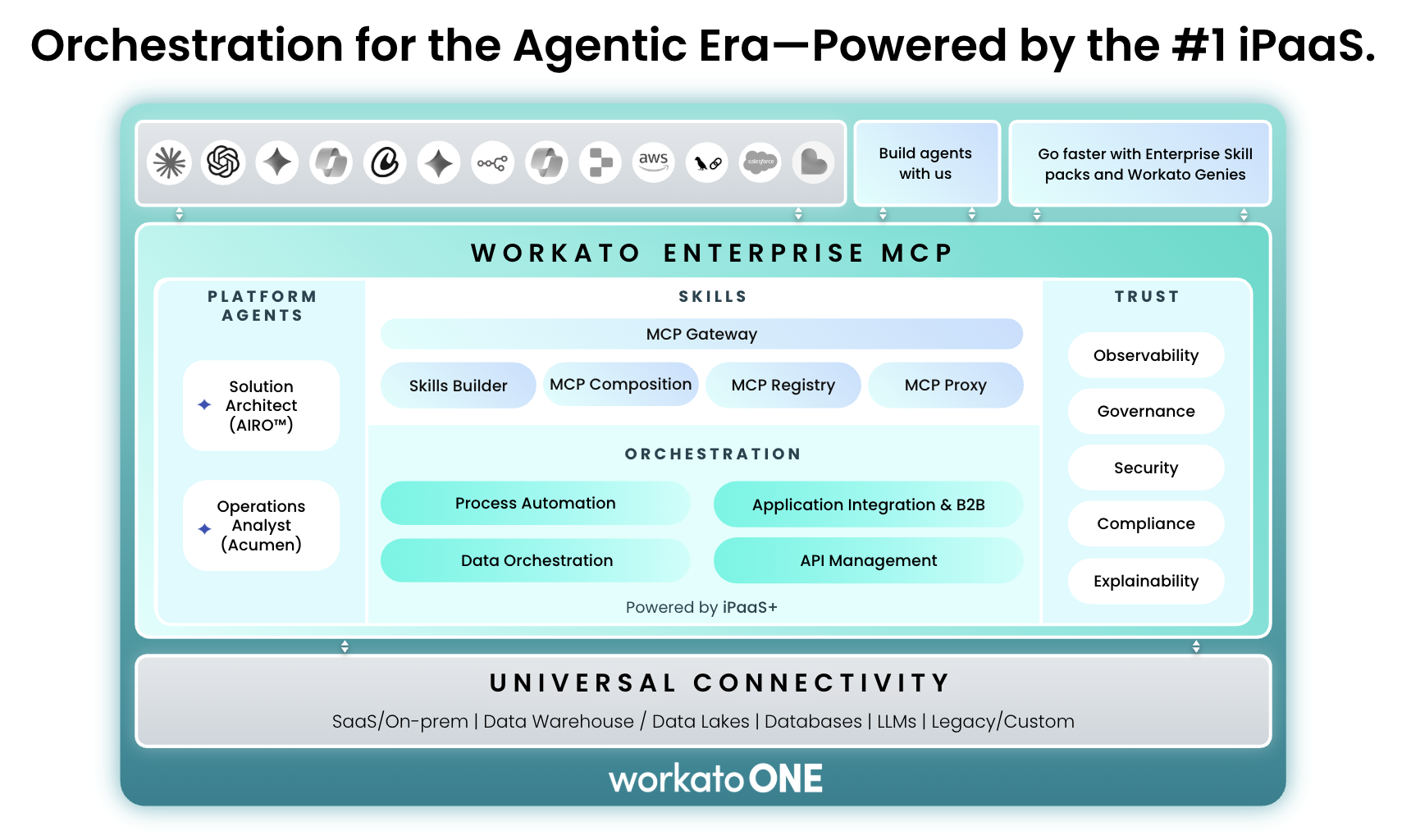
Universal connectivity to 10,000+ systems, knowledge bases, databases, APIs, and on-prem resources gives agents complete context.
Enterprise MCP layer powered by the #1 iPaaS brings transactional integrity, event-driven execution, in-sequence delivery, resilience, and low-latency orchestration to the MCP ecosystem. Agents gain predictability, reliability, error handling, state management, and human-in-the-loop workflows.
Centralized MCP Gateway ensures every MCP request runs through a central enforcement point for identity inheritance, access control, policy enforcement, traffic control, and monitoring—the foundation missing in raw MCP.
MCP Registry lets enterprises whitelist approved servers and block untrusted ones, preventing random open source MCP servers from entering the environment.
MCP Proxy standardizes security, quality, governance, and telemetry across all servers—whether built by vendors, internal teams, or community projects.
Built-in trust and observability provides deep logging, auditable actions, real-time insights, PII protection, permission-aware search, and verified actions. This eliminates the black box problem entirely.
The Bottom Line: MCP Needs Enterprise Architecture to Fulfill Its Potential
Enterprises cannot afford agentic chaos. MCP is the protocol that will enable agents to work across systems—but Enterprise MCP is the layer that makes agents safe, predictable, and ready for mission-critical automation.
To architect an agentic future, enterprises need the structure and safeguards that only Enterprise MCP can provide. Workato is the fastest path to getting there.
