
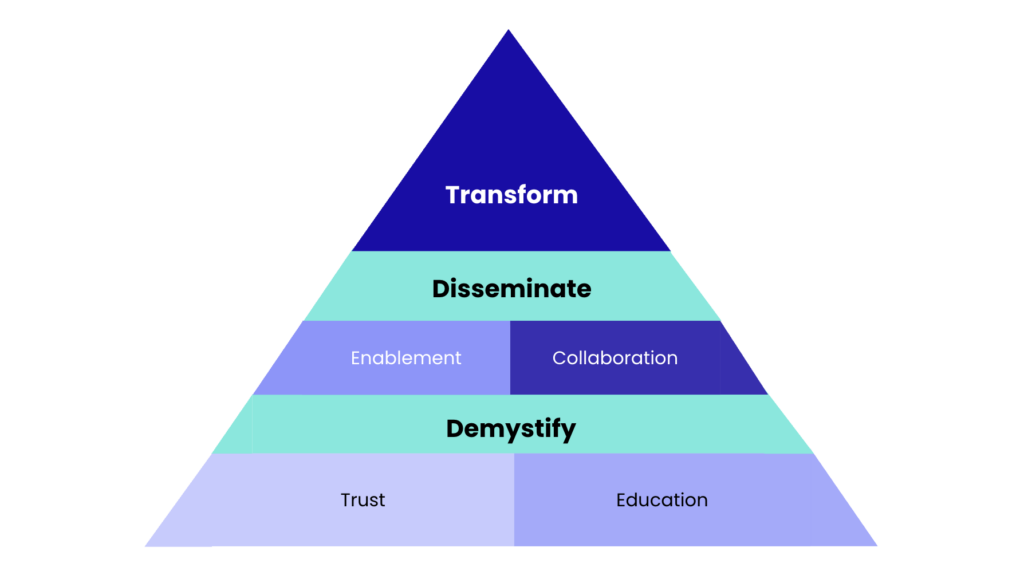
I’ve spent more than twenty-five years working across manufacturing and SaaS companies, and what we’re experiencing right now with agentic AI is one of those rare, category-defining shifts — not unlike the personal computer or the Internet. As CIO at Bazaarvoice, I’ve been in the thick of this transformation. Recently, I presented a framework we’ve built for scaling AI agents, grounded in what we’ve actually tried, what failed, and what’s starting to work.
The CIO Is Now a Change Leader First
The CIO role has reinvented itself about once a decade — shaped by whatever technology was reshaping society. Each wave moved us further from pure technologist to leaders of business impact and change.
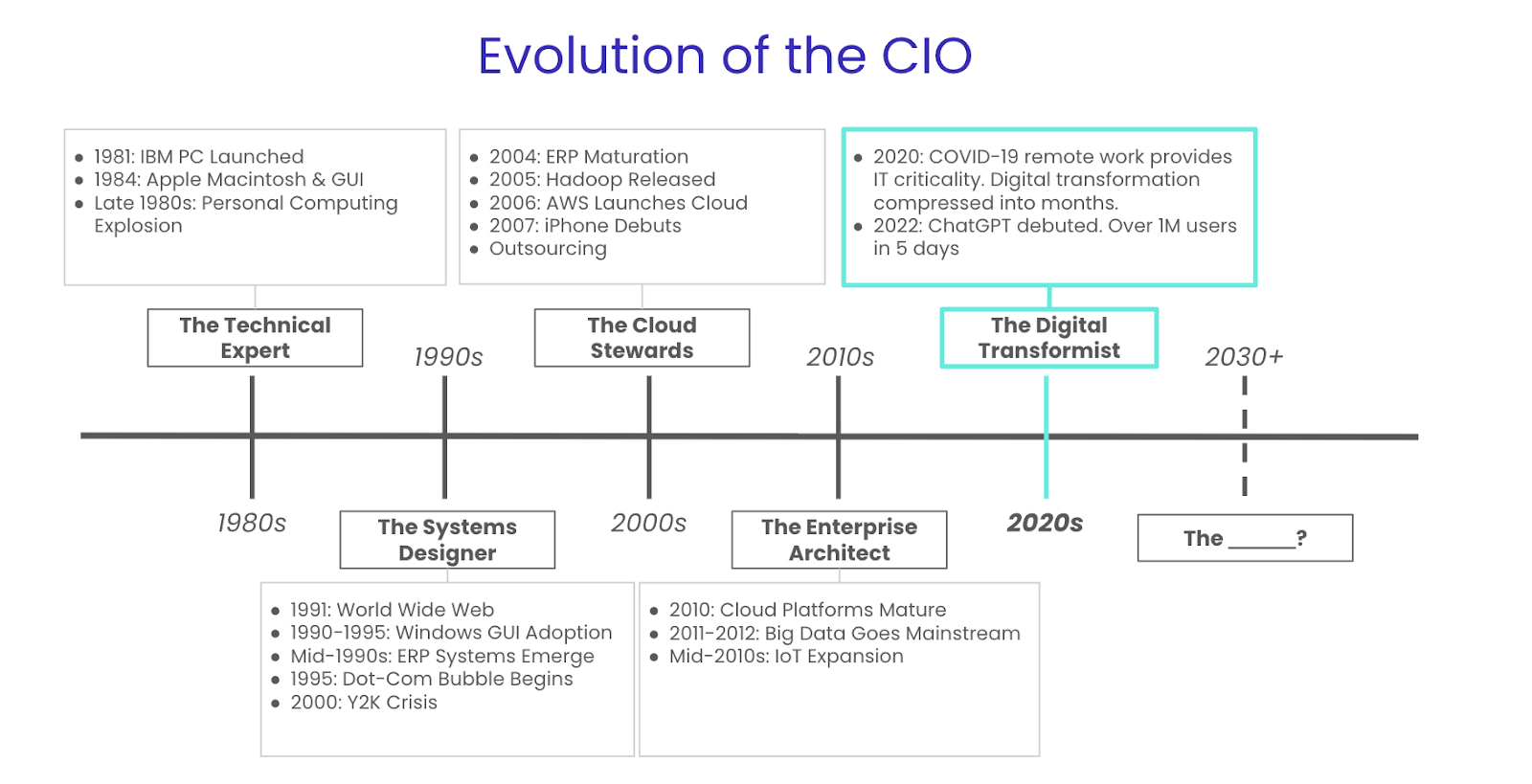
The evolution of AI accelerates that shift dramatically. Technology is more democratized than ever, and our value increasingly lives in how we drive adoption, not just how we keep the lights on.
Think About AI at Different Levels
Before picking tools or use cases, establish a mental model. There are three distinct ways to leverage AI:
- Enabling individual productivity (Gemini, Copilot, ChatGPT, Claude, etc.)
- Enabling corporate-level employee productivity through agents
- Driving innovation in how you operate and serve customers
Think carefully about the different ways you can apply AI to your business, and you’ll make better platform and prioritization decisions.
Step One: Demystify AI Before You Deploy It
The biggest barrier to AI adoption isn’t technical — it’s psychological. If employees believe AI is coming for their jobs, they’ll resist it regardless of how good the tooling is. We tackled this directly by reframing the AI transformation as job evolution, not job replacement. According to MIT’s 2024 research, 60% of today’s jobs didn’t exist in 1940 — and when you list them, they’re normal and unthreatening. AI will do the same thing. As leaders, we have to bring our teams along as that shift happens.
Step Two: Educate the Whole Org, Not Just Your Innovators
Only 2.5% of your organization are natural innovators. The rest need a deliberate strategy to move up the adoption curve.
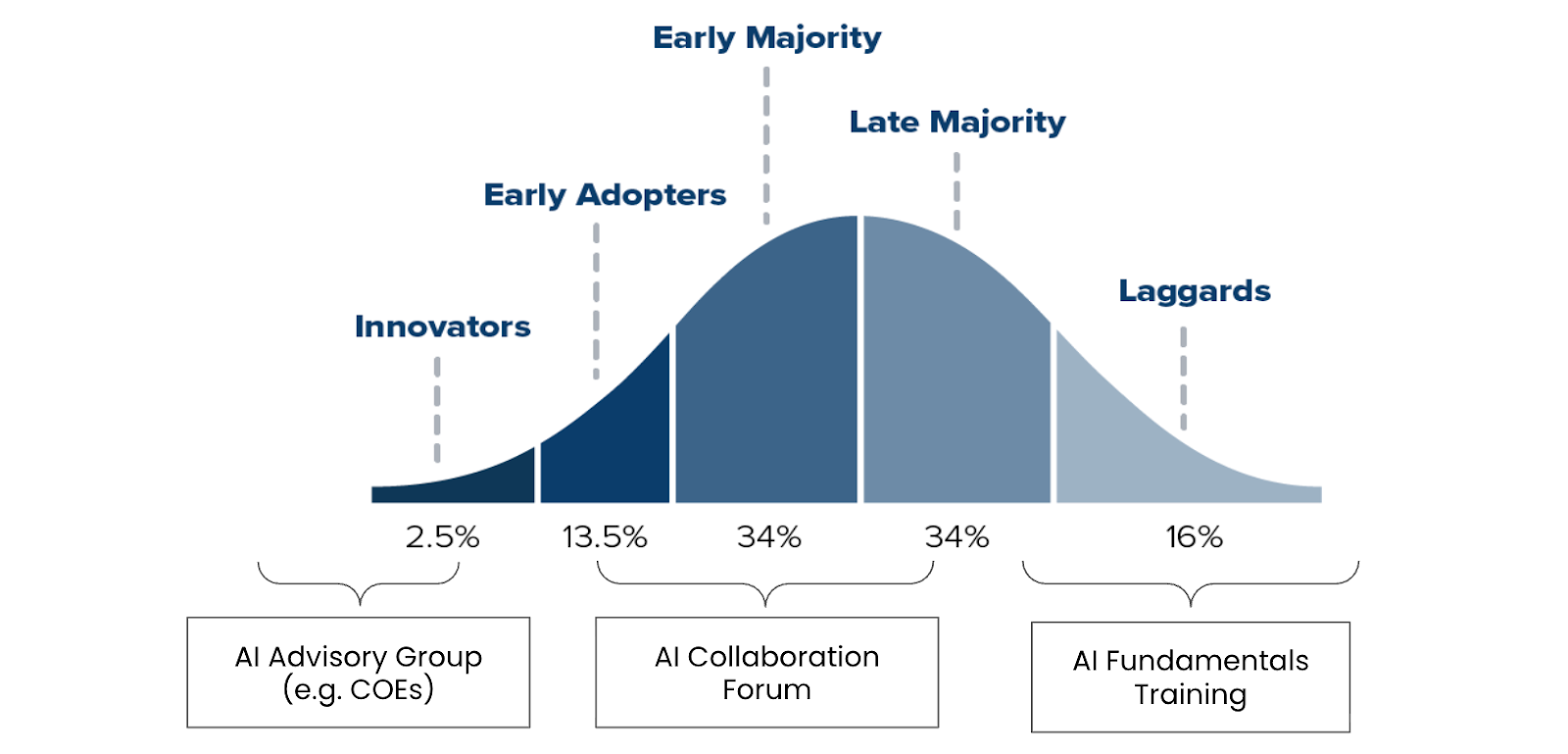
We built a thirty-day AI literacy program focused on daily-use skills — prompting, validating outputs, finding hallucinations — with the goal of building muscle memory, not expertise. We also created AI Collaboration Forums: cross-functional sessions where teams share advanced applications. These forums have become our best incubator for agentic ideas, because the people closest to the work know best where agents could make a real difference.
Step Three: Disseminate AI and Choose Your Platform Carefully
Get AI into people’s hands. For us, the turning point was Gemini becoming available through our existing Google subscription — overnight, we went from cautious early adopters to an organization-wide rollout. For agentic platforms, evaluate on guardrail configurability, monitoring, feedback mechanisms, and human-in-the-loop support. AI agents are not set-and-forget entities. Treat them like a new employee, AI agents need onboarding, oversight, feedback, and room to grow.
Learn From Iterative Pilots — Then Scale Smarter
Our first agentic build was a CPQ agent that automated quote creation in Salesforce via a Slack prompt. It looked great in a demo. The four-week pilot did not gain the adoption we expected. Why? We “fixed” a symptom of the process, not the root cause: we bundled opportunity management with CPQ work, and users wanted more of the former. The lesson: the design of the agentic process matters as much as the technology. Don’t mix processes, and make sure the process and root cause are clearly defined before assessing the agentic solution.
Find Desire Paths — Then Turn Them Into Agentic Workflows
Your best employees have informal shortcuts that aren’t documented anywhere. These are “desire paths”. If you can identify what your top performers do differently and codify those behaviors into agentic workflows, you give everyone else a shortcut to performing at their level.

Desire paths won’t surface in formal process mapping — they emerge from conversations. That’s why we ran a Shark Tank-style workshop: business units pitch their top use cases, we judge and select, and winners get development resources. The energy these sessions generate is just as valuable as the ideas.
Build the Flywheel — Even If It Starts Slow
The components you build for one agent become reusable assets for the next. The more you build, the faster you build. The pace feels slow at first — but it compounds. A few principles to carry:
- Think of agents as employees. They need a function, oversight, and ongoing care.
- Keep humans in the loop. Trust in agents is built through demonstrated reliability over time.
- Collaborate cross-functionally. Your best agentic ideas won’t come from IT working in isolation.
Look for desire paths. The informal knowledge your best people carry is your most scalable asset.